
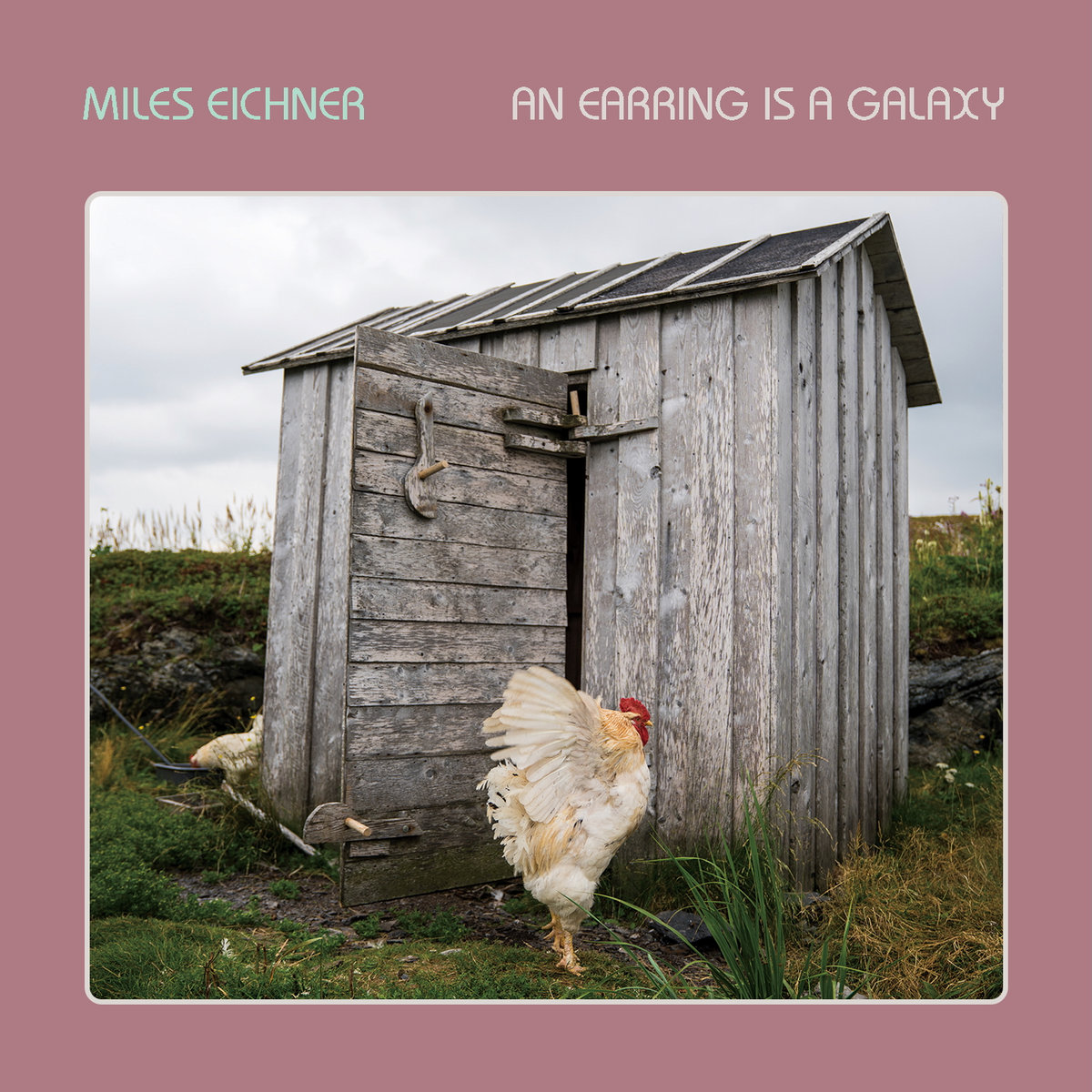
Denver-based guitarist Miles Eichner steps away from the fingerstyle traditions that defined his earlier solo work on An Earring Is A Galaxy, reshaping his sound around modular synthesis, ambient textures, and a more fragmented approach to guitar.
For years, Eichner has been a kind of quiet constant in the Colorado scene, lending his precise, luminous playing to projects ranging from the dreamy atmospheres of Allison Lorenzen to the earthier, country-leaning work of Patrick Dethlefs. His own solo records—especially Bluethroat and Sun In Hand—fit comfortably within the Takoma lineage: intricate fingerpicking, patient melodies, the kind of playing that feels both studied and instinctive.
He could’ve stayed there. Instead, An Earring Is A Galaxy begins with a quiet unraveling of that identity. What started as another guitar-forward record gradually shifted as Eichner found himself pulled toward modular synthesis, paring back the instrument that had defined his sound. By his own admission, it was a disorienting process, watching guitar pieces fall away, replaced by something less familiar.
But that disorientation becomes the album’s core strength. Across ten tracks, the guitar doesn’t disappear so much as it dissolves. It surfaces in fragments—tones, gestures, streaks of light—woven into a wider field of soft drones and gently kinetic rhythms. Even at its most minimal, there’s a sense of movement underneath it all, a low current guiding each piece forward.
“Sun Showers,” the album’s centerpiece, captures that balance perfectly. It stretches out over eight minutes, building a warm, immersive glow that’s subtly sharpened by flashes of Fripp-like guitar—just enough edge to keep the dream from settling into complacency.
What’s most striking is how An Earring Is A Galaxy rewards attention without demanding it. You can follow the details—the way tones overlap, the way space is carved out and filled back in—or you can let it drift past you, like weather. Either way, it holds.
There’s a logic to the sequencing, too. Each track feels like part of a larger system, connected in ways that aren’t always obvious but always felt. It’s not just a collection of pieces—it’s a structure, slowly revealing itself over time.
A small shift in process, then, but one that opens up something much larger. An entire galaxy, hiding in plain sound.




Leave a Reply