
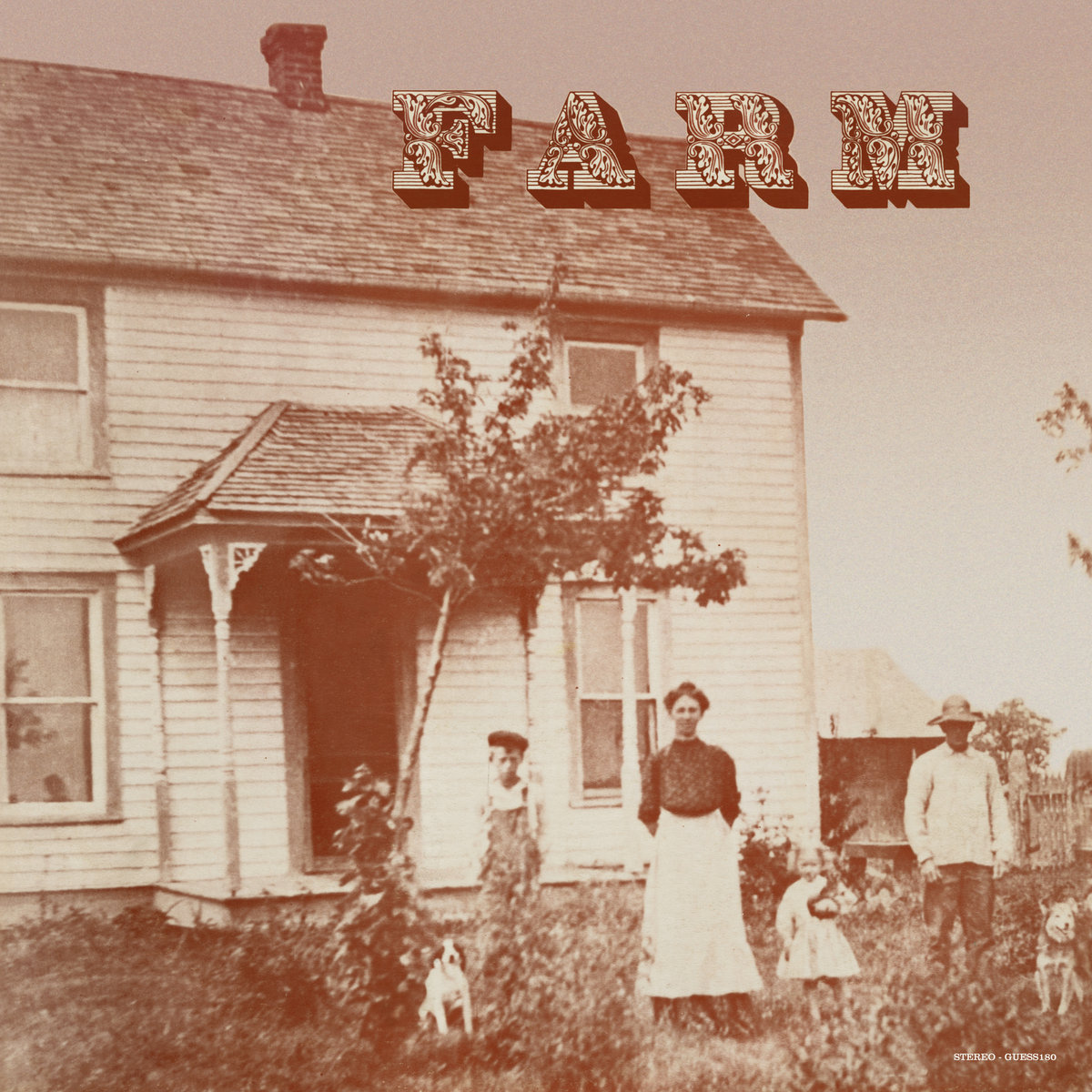
There’s something about a one-shot record that feels like stumbling across a message in a bottle. You lift it from the sand, blow the dust off, and suddenly a world that existed for only a brief moment comes alive again.
That’s the case with Farm, the lone 1971 album by a rural Illinois group who remained mostly obscure in their time. I first shared a short write-up about Farm over on the Patreon page, but the record stuck with me so much that I felt it deserved a deeper dive here on the main site.
Recorded at Golden Voice Recording Studios in South Pekin, Illinois, and issued as a private pressing, Farm has become a holy grail among collectors in recent decades. Original copies are rare and command high prices.
For many years, it circulated largely by word of mouth, appearing in niche psych rock forums and collector catalogs. Then labels like Guerssen revived it, bringing it back into the light for a wider psychedelic audience.

The music is a loose, blues-tinged hybrid of country rock and heavy psych. It showcases the dust of Midwestern farmland, as well as the cosmic reach of bands like the Allman Brothers or Quicksilver Messenger Service.
The opener “Jungle Song” is steeped in that unmistakable late ’60s/early ’70s vibe, dual guitars sparring and weaving before the rhythm section locks into a groove so deep it feels carved into the earth itself. Farm might have been young when they cut this record, but they played with the assurance of a band that knew exactly what they were doing.
“Let That Boy Boogie” is the standout, a barnstorming rocker that tears through eight-plus minutes like a tornado ripping up a cornfield. The Allman Brothers’ influence is there in the twin-guitar interplay, but Farm tap into a more homegrown vein all their own. The harmonica wails, the rhythm section keeps the engine chooglin’, and the whole thing barrels forward with an unstoppable, rollicking momentum.
“Sunshine In My Window” keeps that rural, blues-steeped psych feel, but you can also catch glimmers of West Coast influence, both in the shimmering guitar textures and the drifting, dreamlike lyrics. Still, this isn’t just a crew of Illinois farm boys playacting as San Francisco hippies. Farm distills those influences through their own roots, giving the track an authenticity and character that feels entirely their own.
On an album already brimming with searing guitar work, “Cottonfield Woman” lands like a heavyweight punch. The vocals rise to meet that intensity, raw and commanding, making you pause and wonder: what could this band have become if they’d carried on?
Farm may have vanished after this one shot, but they left behind a lasting testament, a single, thunderous slab of rock ’n’ roll greatness.
The album closes with Farm’s rendition of The Allman Brothers’ “Statesboro Blues,” and it’s a fitting capstone. They may not match the Brothers’ legendary firepower, but their version carries its own grit and character: looser, earthier, and full of raw charm. It’s the kind of cover that doesn’t just pay homage, but invites you back for repeat listens.
Farm’s lineup was Del Herbert (lead guitar), Gary Gordon (second guitar, vocals), Jim Elwyn (bass, vocals), Steve Evanchik (congas, timbales, harp), Roger Greenwalt (organ, piano), and Mike Young (drums).
The band was active in southern Illinois in the late ’60s/early ’70s and dissolved within a few years of the LP’s release. Some lore suggests they impressed Canned Heat’s manager and declined representation, though that remains unverified.
Originally sold at gigs and via word of mouth, Farm vanished from mainstream view. For decades, it was more myth than record, with the few existing copies becoming collectors’ treasures. In the 21st century, reissue labels resurrected it. Guerssen’s 2022 remaster is widely praised for its exceptional sound quality.
Today, Farm stands not only as a rare piece of vinyl but as a document of regional psychedelia: a snapshot of musicians in rural Illinois pushing their sound toward the same spirit of exploration that animated more famous coastal scenes. In collector circles, the album is now regarded as a cult cornerstone of the private-press psychedelic canon—and for a damn good reason.
Check it out for free on The Internet Archive here
You can also find the remastered audio on Bandcamp here
Head to The Third Eye Patreon for more psychedelic odds & ends

Leave a Reply