
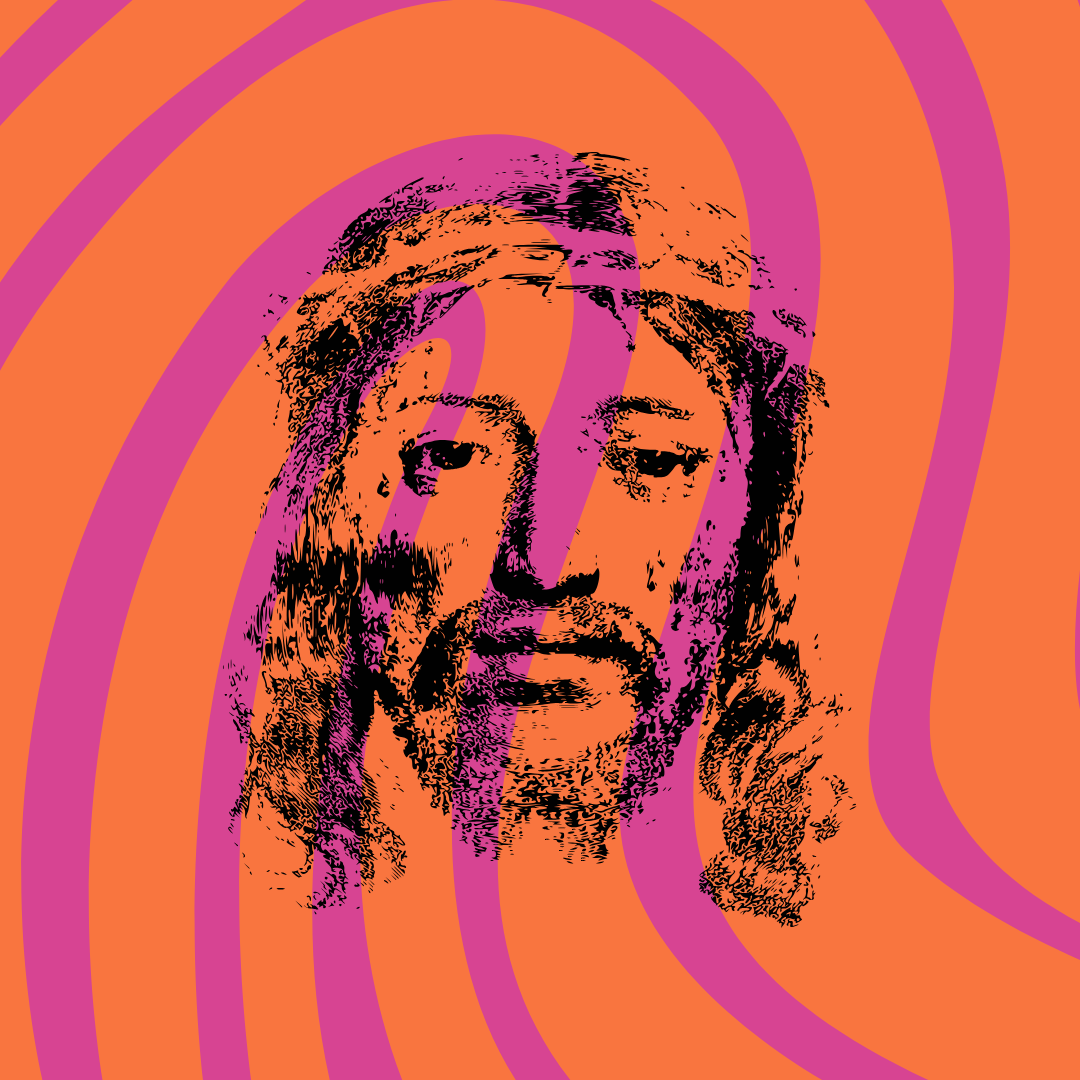
In the dim back room of a thrift store somewhere off Route 66, beneath a stack of scratched gospel records and Elvis compilations, you might find a miracle: a private-press LP with a hand-drawn cross on the label and liner notes that read like scripture scribbled during an acid flashback.
You slip it on the turntable. A low drone, then: reverb-drenched guitar, whispered psalms, tape loops turning endlessly toward the light.
Welcome to the lost world of Jesus Freak psychedelia, a twilight genre that bloomed and withered between the late ’60s and mid-’70s. This was music made by Christian mystics and burned-out seekers, often recorded in living rooms and basements, pressed in runs of 100 or 200 copies, and distributed through church bookstores, communes, or simply given away to save your soul.
Today, it’s a relic of an era when the boundaries between prayer, poetry, and psychedelic revelation blurred into an interesting niche genre.
Tripping toward the light
The 1960s counterculture had a strong spiritual current. Many hippies explored meditation, the occult, Native American spirituality, and Eastern religions like Zen Buddhism and the Hare Krishna movement.
But the idealism of the Summer of Love soon collided with reality. As Charles Perry noted in The Haight-Ashbury: A History, San Francisco became overcrowded and plagued by crime, disease, and drug overdoses. The Oracle, a leading underground paper, warned would-be pilgrims to bring warm clothes, a sleeping bag, and money, not just flowers in their hair.
Disillusionment set in. And out of this burnout rose an unexpected revival: the Jesus People. Spearheaded by Ted Wise, a former LSD-using sailmaker who had a dramatic spiritual awakening in 1965, the movement urged young people to follow Jesus and reject drugs and casual sex. Wise and his companions brought their long hair, eccentric dress, and Dylan records into conservative churches, challenging norms but finding surprising acceptance.
A defining feature of the Jesus People was their music. They embraced folk, rock, and pop, genres often shunned by traditional churches, to express their newfound faith. From small coffeehouse sets to massive gatherings, music was central. In 1972, a festival in Dallas drew 150,000 people.
By the late ’70s, the Jesus People faded, but their legacy endured. They helped reshape evangelical attitudes toward popular culture and birthed what became the Contemporary Christian Music industry. Their influence ushered in a new era of praise bands, electric guitars, and worship choruses (for better or worse), transforming church music for generations to come.
For some of the Jesus People who made music during that era, it was frequently nothing like the polished worship of today’s Christian rock. It was raw, intimate, and strange, infused with drone, spoken word, field recordings, and home-taped imperfections that now sound eerily contemporary. They weren’t trying to build careers. They were trying to reach God, and maybe a few lost souls along the way.
The sacred vinyl underground
Take Montgomery Chapel by The Search Party (1969), often cited as the holy grail of Christian acid folk-rock. Recorded by a small group of college students under the guidance of a Catholic priest, the album blends haunting female vocals, fuzz guitar, and apocalyptic lyrics into a spiritual fever dream. The reverb alone feels like a psychedelic baptism.
Perhaps more otherworldly: The Trees Community, a nomadic Episcopal-based Christian community and group that recorded harps, dulcimers, gongs, and chants in cathedrals across the U.S. Their work, most notably The Christ Tree, feels like something from another dimension, a devotional drone that slips between spirituals and Sun Ra.
These records weren’t meant to chart. Many were only sold at revivals, healing circles, or tucked into free cassette ministries. Most were forgotten until modern music obsessives and reissue labels began to uncover them like lost gospels.
Technically speaking, these records were primitive. But that crudeness became part of the magic. The rough edges weren’t just side effects; they were spiritual textures, evoking the vastness of God or the disorienting awe of a religious vision. Like other psychedelic acts at the time, some of these bands experimented with reversed vocals, or layers of harmonium drones.
What the artists shared was urgency. The apocalypse felt near. So did Christ’s return. But also: the breaking open of the self, the dissolving of ego, the yearning for wholeness. Their music channeled that longing through songs that sounded like weird lullabies born for a thirst for the divine.
Resurrection in the now
Today, echoes of the Jesus Freak era can still be heard in artists like Amen Dunes, Holy Sons, Om, Weyes Blood, and Circuit des Yeux, musicians who blend mysticism, lo-fi aesthetics, and a search for the divine into haunting modern forms. True, spiritual themes have always existed in music scenes, but the Christian imagery used by bands like Om feels a bit different.
We live in another moment of collapse and seeking. Maybe that’s why this music may resonate again. Beneath its dated covers and warped vinyl lies something timeless: the sound of humans reaching, fumbling, singing through the darkness for something bigger than themselves.
Not all sacred music comes from cathedrals. Sometimes, the best and weirdest spirituals are hidden on a dusty cassette in a thrift store, waiting for someone to press play.
Check out The Third Eye’s Tripping Toward the Light: A Jesus Freak Psych Playlist on Spotify


Leave a Reply