
Quiet Abandon is an improvisational psychedelic rock trio from the depths of Philadelphia’s underground music scene.
They specialize in weaving rich, atmospheric instrumental sounds, seamlessly shifting from drone explorations to thunderous, bone-rattling heaviness and even into dark, ambient realms that hint at something sinister. Their music is an invitation to get lost and explore the edges of consciousness.
On October 30, 2023, Quiet Abandon took their immersive soundscapes to a new level with a live, fully improvised score to the 1920 German horror silent film masterpiece The Cabinet of Dr. Caligari. The performance unfolded at Reactive Sound in Jenkintown, PA, transforming the silent film’s eerie visuals into a haunting audio-visual journey.
The Cabinet of Dr. Caligari is a groundbreaking 1920 German silent horror film directed by Robert Wiene. Recognized as a quintessential work of German Expressionism, it tells the haunting tale of an insane hypnotist, Dr. Caligari (Werner Krauss), who manipulates a sleepwalking man, Cesare (Conrad Veidt), into committing murders.
The film’s distinct visual style features jagged shapes, twisted landscapes, and shadows painted directly onto sets, creating a nightmarish world that reflects the distorted minds of its characters.
Screenwriters Hans Janowitz and Carl Mayer, both pacifists disillusioned by their World War I experiences, infused the story with themes of distrust in authority and the oppressive power of authoritarian figures.
The film is framed within a prologue and epilogue, adding a twist that questions the boundaries of sanity and reality. Critics have long debated whether Caligari mirrors German society’s psychological craving for a tyrant, seeing Dr. Caligari as an embodiment of the brutal authority of the wartime government and Cesare as a metaphor for the submissive, conditioned citizen.
Designed by Hermann Warm, Walter Reimann, and Walter Röhrig, the film’s aesthetic rejects realism in favor of an eerie, graphic style that enhances its surreal horror.
Released internationally after World War I, The Cabinet of Dr. Caligari quickly gained recognition, drawing acclaim for its artistry and innovation. Film historian Roger Ebert called it “the first true horror film,” and critic Danny Peary dubbed it cinema’s first cult classic, a precursor to arthouse cinema.
Today, Caligari remains a landmark, influencing horror and film noir and solidifying German cinema’s reputation for artistic depth.
A band like Quiet Abandon—whom we have covered before—is perfect for capturing the eerie feel of a soundtrack for Dr. Caligari. Halloween may be over, but this audiovisual experience is something that horror lovers can enjoy year-round.
Musically, Quiet Abandon’s performance is equally haunting, enhancing the visuals with raw, unsettling sound that sometimes shifts into a shimmering post-rock. The sustained drones and experimental noises create a sense of unease that permeates the one-hour-plus of listening time as the film displays images of shadowed figures.
The understated ambiance and dissonance create a musical soundscape that feels claustrophobic and dangerously alive at once. Listening to it often feels like entering a confined space, where every movement amplifies your heartbeat.
In the context of the film, Quiet Abandon’s work undoubtedly enhances the terror of The Cabinet of Dr. Caligari, pulling viewers deeper into its darkness. But even as a standalone album, this performance is a thrilling plunge into the abyss. Enjoy!
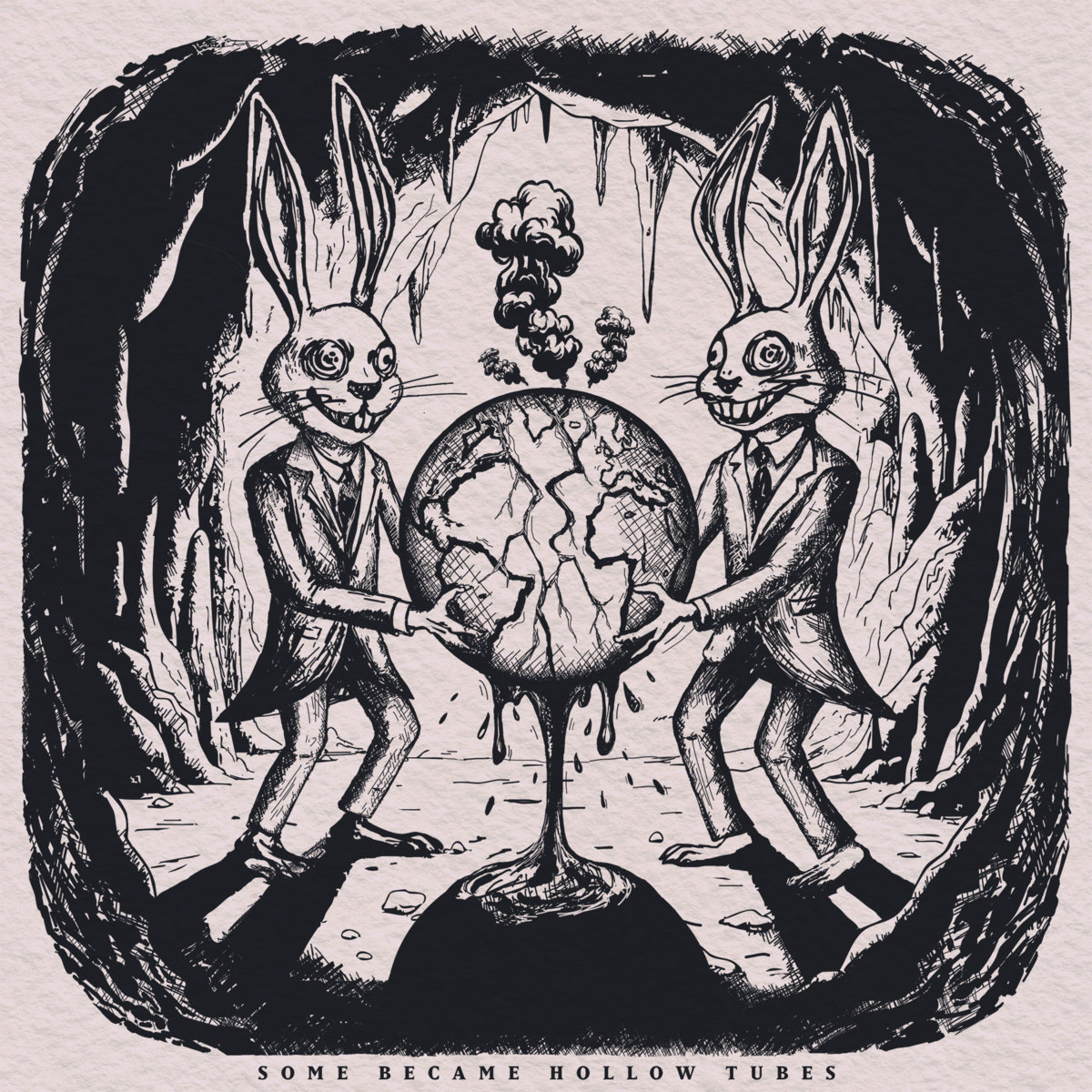
Check out The Cabinet of Dr. Caligari by Quiet Abandon on Bandcamp here.



Leave a Reply