
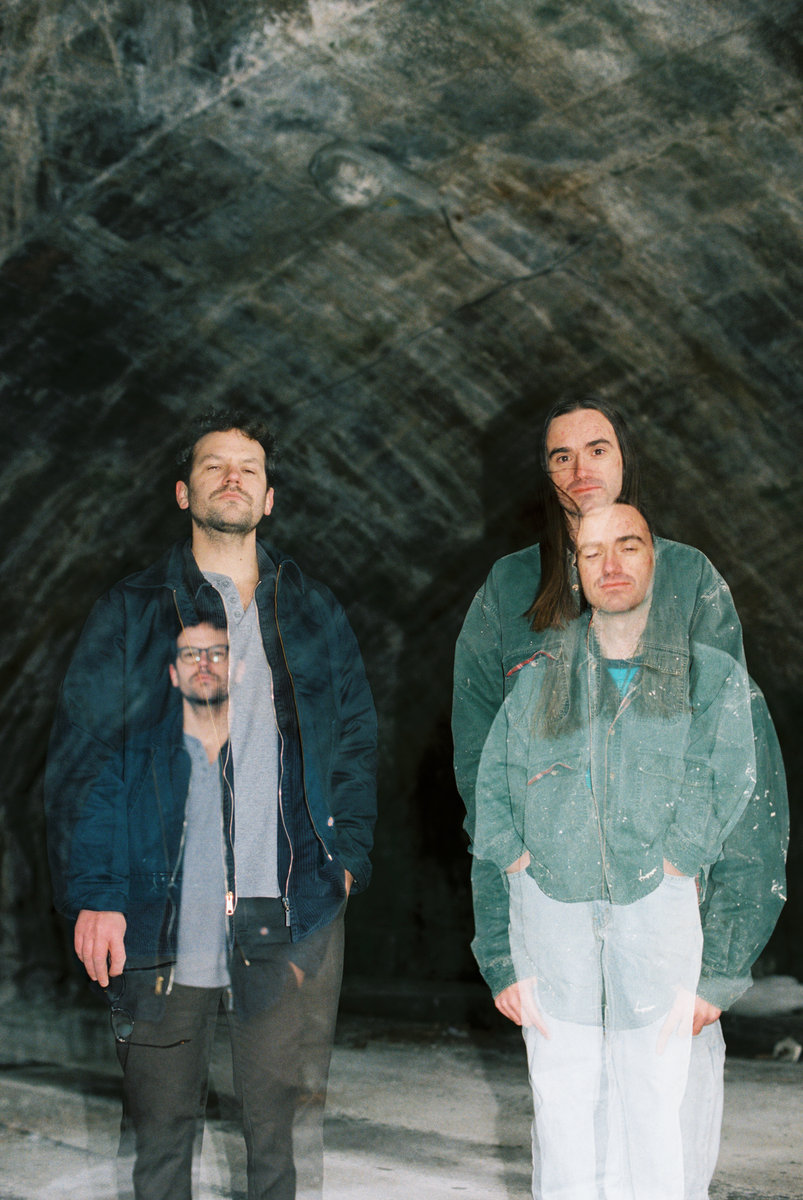
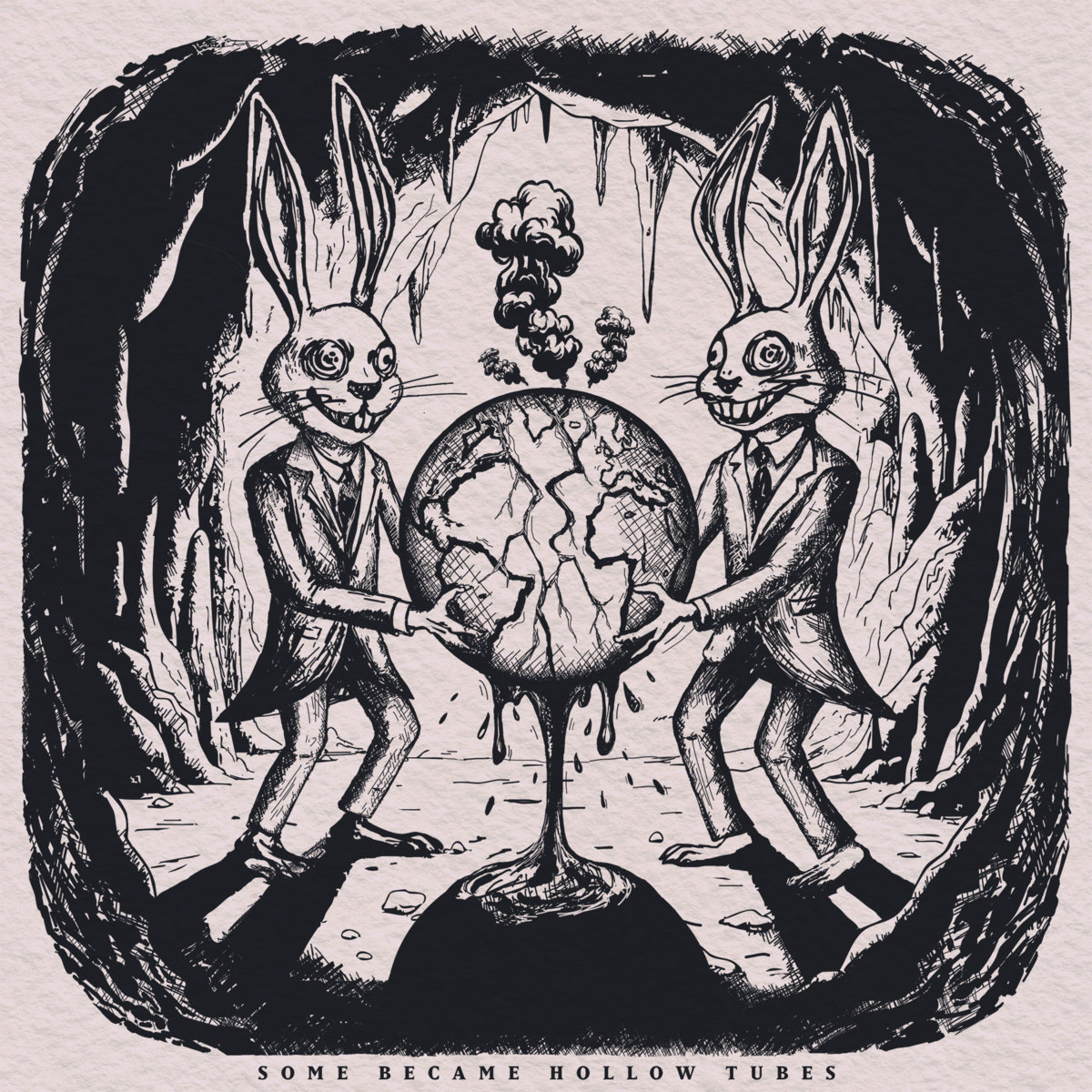
Prepare Thyself’s debut album, Void Jazz, is less about jazz as we know it and more about inviting you into a peculiar and adventurous soundworld.
Forged from the shared curiosity of Andrew Kruske and drummer Eli Weidman, who first bonded over obscure Afrobeat records during bakery shifts, the record channels spiritual jazz, psychedelia, and cosmic improvisation into something deeply personal and immersive.
Inspired in part by Malombo Jazz Makers and late-night meditative sessions, Void Jazz thrives on atmosphere over virtuosity, spontaneity over polish. Each track is its own sonic ecosystem, alive with unexpected grooves and ethereal textures, oscillating between serenity and raw, eruptive energy.
In a world obsessed with labels, Prepare Thyself simply asks you to listen and drift. Ahead of the album’s release on July 11th, we talked with Andrew Kruske to explore the philosophy, process, and serendipitous spirit behind Void Jazz.
Interview with Andrew Kruske of Prepare Thyself
Third Eye: You reference building songs from feel, not formula. How do you know when a track is finished, especially when working with so many ambient and improvisational elements?
Andrew Kruske: The answer to that has evolved over the years, but it’s always been an intuitive feeling that’s really hard to describe. I think it’s mainly about playing something back in a variety of listening environments and consistently feeling like it’s full and engaging. I usually have a long-running list of things I want to try in a mix, even if it’s just slight EQ or panning adjustments.
I think I have to be in the right sort of evaluative mood to make that decision, though. I’m a lot more conscious of the energy and attitude I’m bringing to the table these days. If I’m not in the right headspace, I’m better off messing with a synth or something improvisational than making overarching final decisions like that. But if I can play it in three different environments and feel satisfied, it’s done.
Third Eye: Void Jazz draws from atomist philosophy and reflection. How did those ideas influence your writing or recording mindset?
Andrew: Reducing the world down to just the most basic parts, atoms and the void, can definitely be helpful for me when confronting complex, anxiety-inducing issues. It’s all just atoms and void. Atomism has mostly been left in the past in a lot of ways, replaced by more nuanced ideas in modern science and philosophy.
Either way, I love returning to ancient literature and philosophy when I’m working on something because it reminds me that our world, with largely the same sorts of people and problems, can be taken apart and put back together in completely different ways. There’s not just one correct way of understanding the world, and change is not only possible but inevitable.
I do find that comforting and inspiring, especially when I think of the long list of contemporary issues that might bum me out from time to time. Society and language are not inflexible, static things; they change and evolve and it’s a beautiful, very human process. I think those older books provide a reminder to just be present, to be myself, and stick to the things I enjoy and actively want to spend my life on.
I do think atomism specifically is a sort of philosophical approach that gives you a lot of freedom and agency as an individual, also. There’s no room for fate, there’s no such thing as destiny, no one is imbued with some sort of divine power.
That can be a creatively freeing perspective as well. It’s just about getting the pieces together and seeing what happens. I’m not waiting for inspiration or intervention, I’m just getting things done as I can, one step at a time.
There’s no mysterious outside force keeping me from making the things I want to make, it’s all just up to the individuals involved and what we’re able to do. If it doesn’t work out, we just didn’t make it happen. We weren’t cursed, or something. That all seems obvious, but I don’t know that everyone operates that way or consciously confronts that.

Third Eye: How did the reissue of Down Lucky’s Way by Malombo Jazz Makers spark your creative direction for this record? What was it about that record that energized you so much?
Andrew: I love that record! At first, I was really drawn in by the tone of it. The guitar has this beautiful, dark, clean tone, like someone just plugged straight into the amp with no effects. It reminds me of the guitar on the third Velvet Underground record: confident, but unadorned.
It’s a great reminder of how engaging that immediacy can be. I haven’t heard a lot of jazz records where the guitar fills that sort of minimalist, repetitive role; that’s the way that I love to play guitar the most, but I’m used to applying that to a sort of psychedelic indie rock context. I felt like it would be really entertaining to try to make something with a jazz influence where the guitar provides that sort of stable, rhythmic anchor.
Third Eye: Do you see Void Jazz as a one-off experiment, or is it the beginning of a new musical identity for Prepare Thyself?
Andrew: When we started, I think we both just wanted to try something new and just see what would happen. But without ever really planning out, we happened upon a process that really worked for us, working through ideas and improvising in stages. I feel like the whole process of making this first thing allowed us to get pretty good at that, and it just makes sense to keep it going; I’d love to see what that process evolves into. It definitely feels more like the beginning of something than a one-off project to me.
Frequently in collaborating with people, the ideas and excitement are there, but when it’s time to actually work on something, it’s really a struggle. With this project, we were always on the same page in a way that we didn’t have to stress about anything or debate anything. I have a lot of trust in Eli’s judgment and taste, and I think we both just want to make things that we’d want to listen to. It feels like we pulled that off, and had a good time doing it. So I think we should just keep going, if that’s the case!
Third Eye: Were there any moments during recording where the music surprised you, took you in a direction you didn’t anticipate?
Andrew: Those are always my favorite moments, I love to be surprised like that in the middle of a project! So many things were pleasant surprises on this. The final track was originally supposed to be half as long, and only had the basic parts of that spacey, free-flowing first section.
We both just wanted it to be longer, and impulsively extended it out into that second, more traditional section. I didn’t plan on doing any of that when we first started that song, and that’s one of my favorite sections of the record.
The end guitar solo on that track was that sort of scenario also; I just wanted an ambient, fuzzy wash of guitar in the background. I was in a pessimistic headspace on that first take and thought that I wouldn’t keep what I was recording. When I hit a point that felt like I should add something different, I really just channeled a moment of frustration into atonally attacking the strings.
I love when Ira Kaplan does that on Yo La Tengo songs or especially in a live setting, he’s definitely the king of that. But, I just left that take in there and came back to it the next day, expecting to replace it. I was surprised by how genuine and fitting it felt, and I decided to just leave it as is, even though it wasn’t some premeditated, technical solo.
Third Eye: How do you interpret the idea of the void? Is it terrifying, generative, meditative … or all of the above?
Andrew: I do think it’s all of the above! I think I really started thinking about the void as a more complicated concept when I was reading Lucretius, and he really presents it in a strangely comforting sort of way. I guess this strongly connects back to the whole atomist thing that was in the background on this record.
De Rerum Natura is a deeply strange old book, there’s not really a lot out there that’s like it. I don’t know that it feels ahead of its time, it mostly just feels out of time, like it was written by a genuine prophet or someone from another planet.
But yeah, I guess I found that simplification comforting somehow. Atoms, void, and nothing else. Somehow, the void in that context is a great reminder that human life isn’t permanent, and to not hold onto anything for too long or stress out about unknowns more than I need to.
So for me, I think “meditative” is pretty spot on. I think that’s mostly the feeling I was trying to channel into the mixes. But it is also undeniably a bit terrifying and incomprehensible at times too.

Third Eye: Last question, a silly one … Aliens land at your doorstep and ask what jazz is. You hand them Void Jazz. What’s their reaction?
Andrew: Aw man, I wish I could hand them Lanquidity or Karma or something instead! Haha. I’d love to get an alien’s reaction to those in particular. That’s a good question though. If I have to hand them my album to explain, I’d hope that they’d be able to extract that on some level, it’s about having a musical conversation, speaking and listening, expressing yourself and amplifying someone else’s voice in equal parts.
I’d hope they’d be able to feel the exploration and experimentation, and that they’d be intrigued by the variety of sounds and textures. Or maybe they’d just get a moment of peace and reflection out of the deal. Given where they’re coming from, I’d hope they’d feel right at home out in that meditative void.



Leave a Reply