
Not all legends make their mark known immediately. Some do so subtly, sometimes so subtly they can become lost to history. If they’re lucky, they’ll resurface, but only when niche communities discover their efforts, allowing their works to be revisited years after they were first created.
Such is the case of Phil Pearlman, the frontman of Relatively Clean Rivers, and the band’s one self-titled release. Released in 1976 with a limited press run, it was too far removed from ‘60s psychedelia to feel relevant. In a way, it almost felt purposeful as it stood on the shoulders of several giants. With Grateful Dead folk leanings, Neil Young-esque guitar work, and echoes of Quicksilver Messenger Service, the album may have felt like a hippie swan song.
Even the LP’s back sleeve carried a proclamation similar to the calls the “free love” generation used to cheer, as it waxed poetic about having all the races and creeds come together to melt their weapons into farm implements to create a cleaner, healthier world. But was the statement tongue-in-cheek?
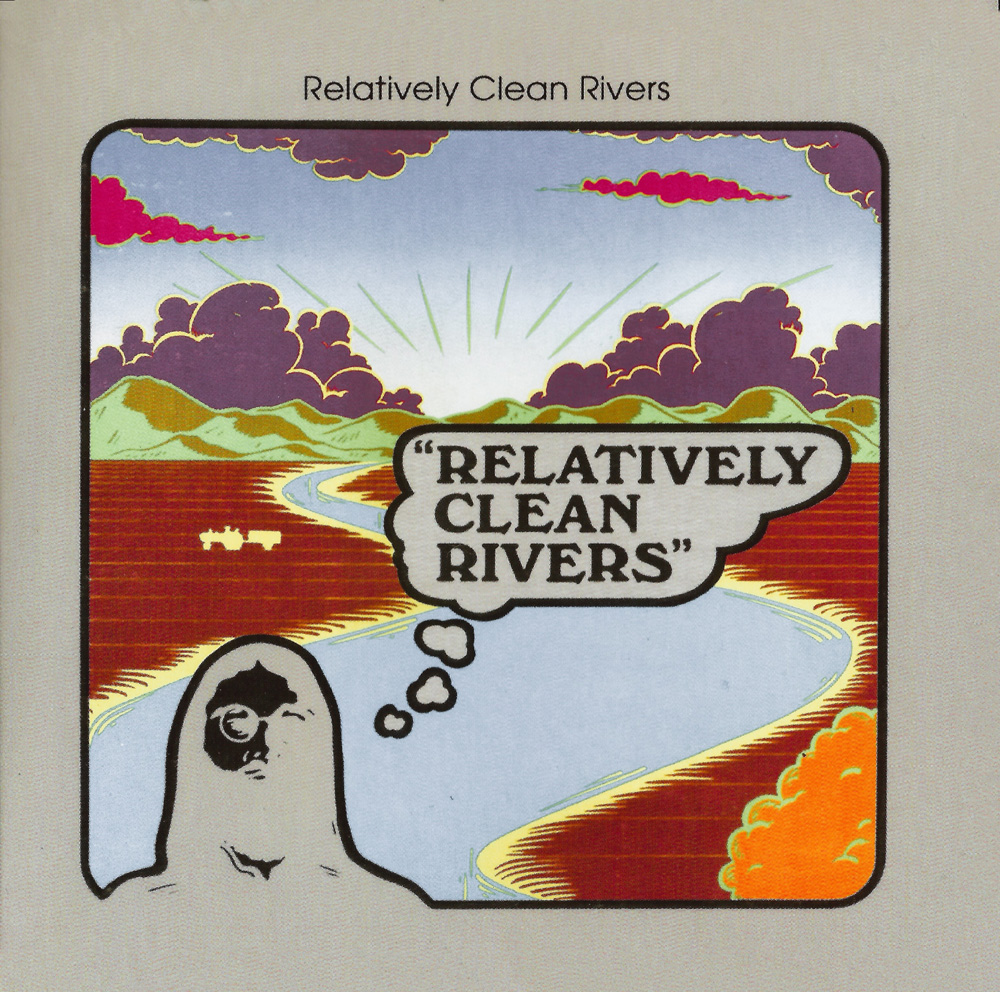
Flipping the LP around, you’d see a black and white John Lennon-looking hippie cartoonishly “say” the album title in a comic strip speech bubble as he stood before an idyllic, colorfully psychedelic pastoral scene. Whether the LP’s statement was meant to be somewhat ironically detached or fully earnest, the listener will never know, as Pearlman has all but for one brief moment in the early 2000s, disappeared from public consciousness since the album’s release.
This is because shortly after the album was made, Pearlman found God and quit releasing music, even changing his name to Phillip Gadahn in tribute to the Bible’s Gideon. From there, Pearlman disappeared only to resurface when his son appeared in the limelight in 2001.
This is because after the September 11th terrorist attacks, Pearlman’s son Adam Yahiye Gadahn, also known as “Azzam the American,” was exposed as one of the key spokesmen and prominent members of Al-Qaeda. Though a shockingly strange link to the “Gadahn” family name, it did have one benefit: bringing Phillip Pearlman back into the public consciousness for a moment, reminding some of the music he created.
Pearlman’s last creation of Relatively Clean Rivers lives within its hippie pastiche and its ability to quote and riff on psychedelia with encyclopedic brilliance. Beginning with album opener “Easy Ride,” faux-live cheers are drowned out by a clean down-home stomper guitar riff.
The song reveals its true intentions quickly: half cosmic country, half psychedelic folk, and all in all, a fantastic Grateful Dead tribute. Pleasant lyrics, melodic guitar solos, and bluesy harmonica licks weave in and out of its classic three-minute pop song structure.
A psychedelic spin on an elongated Neil Young-esque guitar solo floats by on the next track “Journey Through The Valley of the O.” As it jams against an acoustic groove, it’s hard not to feel like you’ve been baptized with the cleansing waters of psychedelic past, ready to become a new convert.
Lyrics further these intentions within the song as they question where to find fulfillment in life, whether it be through natural means or material gains:
Too many countries
With a headful of gold
As I walked along the waterfront
The day was getting old.
Could I believe
If I had nothing to gain
Would I walk away to paradise
Or stay playing the game?
After a seemingly Mason Williams “Classical Gas” inspired intro, the next track “Babylon” is undercut by a thrilling synth and dissonant distortive elements before revealing a mind-opening wall of folksy psychedelic sounds.
Though the chorus sounds eerily similar to Young’s “Down By The River,” cacophonous mid-piece instrumental breaks stop it from becoming derivative. Whether you focus on the evil-sounding synths akin to ELP’s “Lucky Man” or messily picked fuzzy guitar solos reminiscent of a late-night jam sesh, the result will be remembered.
It leads into the final track on side A, the instrumental “Last Flight To Eden” which captures the hallmark elements of a Jethro Tull song, down to the arpeggiated acoustic guitar chords and flute solos.
It’s clear … that Phillip Pearlman was wounded by the plights of humanity. Like his fellow kin, he hoped to find the answer through psychedelics and music.
Side B begins with “Prelude.” The track introduces reverse-effect guitars before seagulls interrupt them as ocean waves materialize in the distance. These atmospheric noises set the tone for the Californian rays of “Hello Sunshine.”
There’s nothing mind-blowing about this Buffalo Springfield-esque B Side, but it’s sure to bring a warm smile to the listener’s face. “They Knew What To Say” continues the trend, though a little more recognizably, as elements of the sung melody feel at times like a slowed-down version of “For What It’s Worth.”
Though “The Persian Caravan” is a deviation from the rest of the album’s tonal center, it’s an appreciated shift. During the opening, it borrows heavily from the sitar work of Ravi Shankar, before devolving into a plodding, country groove. Intriguing cymbal rushes interplay against guitar solos, and later flute work induces a meditative state for the listener to zone out to.
The album concludes with “A Thousand Years,” another cosmic country entity where the theming of the album is summed up lyrically:
I have heard from the other side
The infinity of space
Maybe this time we’ll find the source
Where we began this race
And I been told before
Be a thousand years or more
So tell us what the sign will be
Of the end of the age we know
War and famine everywhere
There’s no place left to go
It’s clear through these lines that Phillip Pearlman was wounded by the plights of humanity. Like his fellow kin, he hoped to find the answer through psychedelics and music. When it seemed that these provided no answers, he moved onward to finding the answer in God.
Though we have no answer to whether he found fulfillment in this life change, after hearing Relatively Clean Rivers, many listeners may wish he had kept releasing brilliant music.
Though still obscure to mainstream music culture, Relatively Clean Rivers’ lasting impact is found within the vinyl community and psych-rock fans. Despite numerous bootlegs over the years, an original pressing of Relatively Clean Rivers can go for upwards of two grand.
Although Pearlman’s music may have not incited the great awakening of peace he wrote in the liner notes on the back of his album, his legacy with Relatively Clean Rivers has brought enjoyment to those who have discovered it.
Although you can revisit Pearlman’s selections on YouTube any time you please, the few chosen ones to own Pearlman’s greatest work say there’s nothing like experiencing it like it was intended to be. Recently this year in March, a tribute album by various artists was also released titled after one of the songs on the original Relatively Clean Rivers LP: Hello Sunshine.
Following in line with Pearlman’s intentions to better the world, proceeds went toward helping the LA wildfires. Although Pearlman’s music may have not incited the great awakening of peace he wrote in the liner notes on the back of his album, his legacy with Relatively Clean Rivers has brought enjoyment to those who have discovered it.
This article was written by Bill Cooper, who writes about music, films, books, and pop culture in various internet corners like Spectrum Culture. His two greatest urges, discovering new music and writing, keep him up at night and going during the day. The extensive amount of coffee he drinks may also contribute.
You can follow Bill Cooper on Bluesky and his Substack, Bill’s Takes.



Leave a Reply