
Jim Morrison, poetic prophet of the counterculture and frontman of The Doors, is long presumed dead, found in a Paris bathtub in 1971, no autopsy, buried in Père Lachaise Cemetery under a shroud of mystery.
Fans still ask, “When did Jim Morrison die?” and the official answer remains July 3, 1971, at the age of 27. But what if the official story isn’t the whole story? What if Jim Morrison’s death was just a poetic sleight of hand, and the Lizard King never actually croaked?
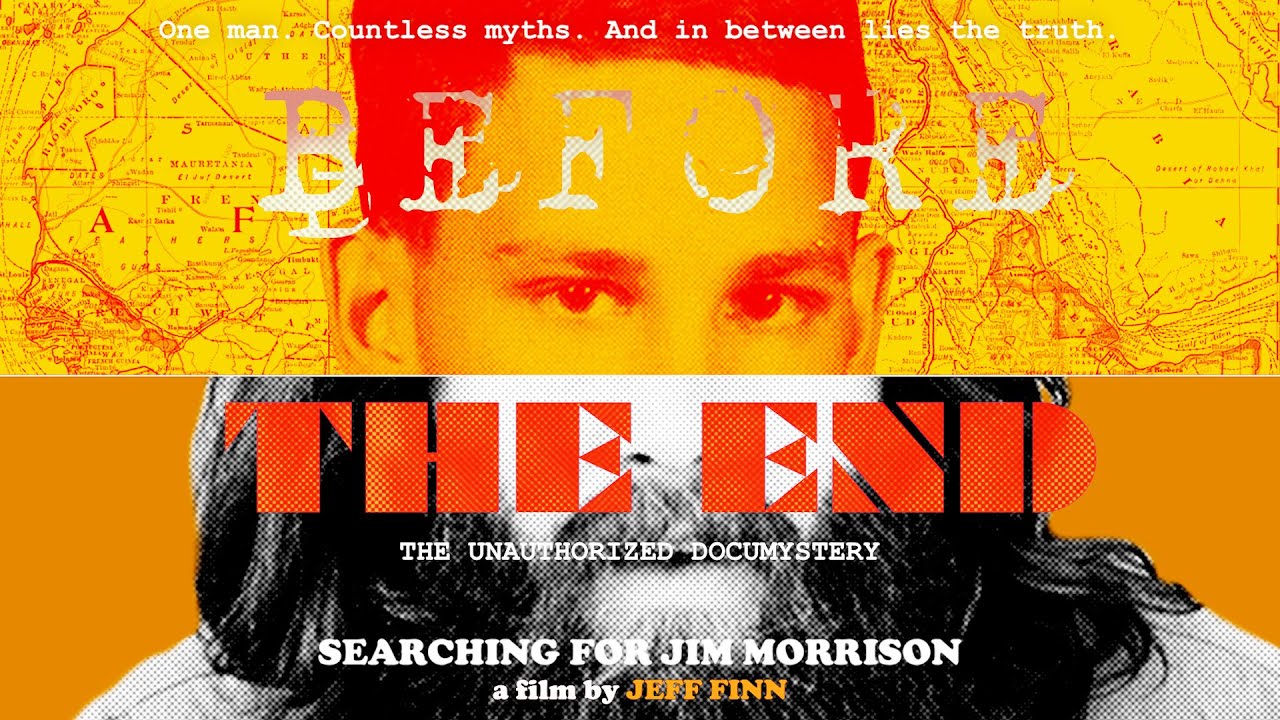
That’s the wild theory behind Before the End: Searching for Jim Morrison, a three-part documentary now streaming on Apple TV+. It’s directed by Jeff Finn, lifelong Doors obsessive and amateur sleuth, who presents a compelling, if deeply odd, case that Morrison faked his death and is now living as “Frank,” a janitor in Syracuse, New York.
Finn has apparently spent 39 years investigating Jim Morrison’s death, poring over archives, haunting message boards, and possibly decoding riddles in steam rising from coffee cups. His smoking gun is a man named Frank who mumbles cryptically in interviews, has a scar where Morrison had a mole, and once liked the Facebook page for Finn’s earlier Morrison project.
Oh, and two of Morrison’s ex-girlfriends burst into tears upon seeing Frank’s photo. Coincidence? Possibly. Convincing? Eh, depends on your fondness for conspiracy.
Now, let’s pause to consider the setting: Syracuse, New York. Cold. Economically cursed. Not exactly Ibiza. If Morrison really faked his death to vanish into obscurity, why not choose somewhere tropical, like Tupac allegedly did?
Syracuse is what happens when you roll a snow globe of broken dreams. Yet Finn insists it’s precisely the kind of nowhere town Morrison would run to, where nobody looks for a Rock God because they’re too busy scraping ice off their windshield.
The doc opens with a disclaimer of sorts: this is not a polished, BBC-tier biography. Before the End has the charmingly low-budget feel of late-night cable from the ’90s, but that’s part of the magic.
Finn isn’t selling us a sanitized story. He’s rolling out a shaggy, obsessive tapestry of interviews, vintage photos, and poetic rabbit holes. His interviews start with Morrison’s early life, before his death became a myth. No one thought he’d become a singer; he was a bookish kid obsessed with poetry, more Rimbaud than rock ‘n’ roll.
Even if the theory doesn’t hold water (or bathtub water, as it were), Before the End is weirdly moving.
Finn makes a strong case that Morrison was never interested in being Jim Morrison™, Rock Star. He was a guy in love with transformation, reinvention, escape, themes echoed in the very poetry he devoured.
Given that, Jim Morrison’s death feels almost too on-the-nose: no witnesses, conflicting reports, no autopsy, and a “doctor” who appeared days after the fact. Morrison had even requested a replacement passport that was never found. Hiding in plain sight starts to sound more like a verse he might’ve written himself.
The interviews in Before the End are raw and full of strange, tender details. One ex-girlfriend recounts a disturbing, possibly abusive encounter with Morrison, tinged with sadness. Others reflect on his charisma, trauma, and increasingly erratic detachment from fame. By the end, nearly everyone agrees: if anyone would fake his own death and reappear as a cryptic custodian named Frank, it’s Jim.
Is Frank actually Morrison? The evidence ranges from intriguing to internet-level bonkers. A scar here, a Facebook like there. The forensic “evidence” in the third episode veers into comedy—more “CSI: Poetry Slam” than anything remotely scientific. But to Finn’s credit, he never fully commits to his theory without acknowledging its strangeness. Maybe Frank is just a Morrison mega-fan with uncanny bone structure. But then again, maybe not.
Even if the theory doesn’t hold water (or bathtub water, as it were), Before the End is weirdly moving. The idea that Morrison slipped out of the spotlight to become just some guy, a snowy-day janitor in a city no one chooses voluntarily, feels almost redemptive.
True or not, it’s a better story than the official version. And really, isn’t that what Morrison always wanted—a myth you could never quite catch?


Leave a Reply