

Echodelick Records is a label that continuously introduces me to great new music, especially experimental psych stuff. California-based IO Audio Recordings is one of the projects that Echodelick recently showcased, and it’s been a pleasure exploring the work of this one-man band.
Based in Orange, California, IO Audio Recordings focuses on experimental space rock. The project’s Spotify bio is quite unique, saying it is a ‘bio-organic compound developed in Bakersfield, California, at the height of the Vietnam War.’ It gives new meaning to the ‘Bakersfield Sound.’
All jokes aside, IO Audio Recordings has released some excellent instrumental music in the past few years, including his recent split with Trigona and records like 2017, A Guide to Drowning, and I Can Hear The Hiders Coughing.
The Third Eye wanted to learn more about the mystery man (Jonas) behind the IO Audio Recordings project, and he was kind enough to answer a few of our questions. Check out the interview below with IO Audio Recordings, where he talks about working with Trigona, his music-making process, and more.
Interview with IO Audio Recordings
Third Eye: Thanks for doing this interview! Can you tell us more about yourself and your music?
IO Audio Recordings: It’s my pleasure. I’m Jonas, the lone voice behind IO Audio Recordings, a project that focuses on creating music that I want to hear and creative packaging that I’d want to collect.
Third Eye: What got you into making music? And how would you describe your music to someone who’s never listened to it before?
IO: Honestly… I don’t know. Sound and music were things that I have always been attracted for as long as I can remember which is kind of odd really because my family wasn’t very musically oriented or particularly creative in general. While my parents had a modest record collection, I don’t really recall them playing any of those records much at all. They really didn’t listen to the radio much or anything like that.
My earliest musical memories came from this portable record player that I had. It was this little plastic number that you could fold up and carry around like a little suitcase. Along with that I had these book/record sets where you could put on the records and they would teach you stuff like how to tell time, identify animals, etc… and I used to play that stuff all the time.
But what I really remember most about that was how I was fascinated with being able to manipulate the sound coming from those records by messing with the speed dial, or spinning the records around by hand. The biggest thing for me as a kid was discovering my parents reel to reel tape recorder. When I discovered that I could actually record sound, I was hooked. I spent hours just recording… nonsense really. I’d sing songs, make strange sounds, create fake advertisements and whatnot. Probably my two favorite things in life as a kid were legos and that reel to reel tape recorder. It’s honestly something that I’ve always had a drive to explore and partake in.
As for your second question, I think the easiest way I’ve found to describe it is that it is a merging of the two things I’ve found myself most attracted to musically: rock in its myriad forms and experimental/avant garde musics. For my day job, I work as a sound designer for a video game company. I create sounds for all manner of things weapons, magic, creatures, etc… or as I like to say, I make my living creating my most experimental music.
However my musical foundation was initially built on rock music, distorted guitars, riffs, and rhythm and I’ve never lost my love for that. So io audio recordings was created as a way for me to express that very core musical element of myself albeit filtered through the sense of experimentation and boundary pushing that has always been the driving force behind my musical journeys.
Third Eye: Can you tell us about the split release you recently did with Trigona? What was it like to work with him?
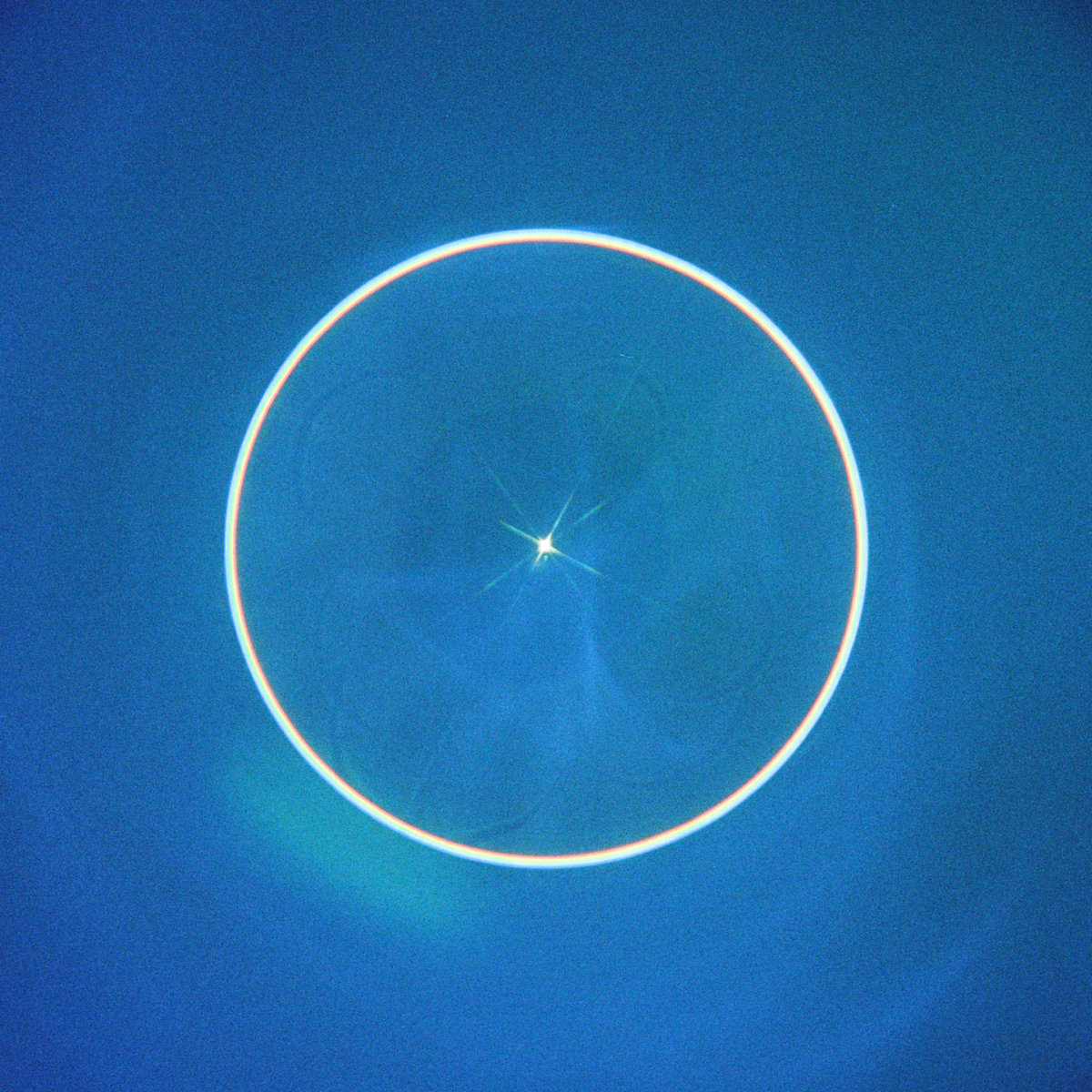
IO: Rob from Trigona is a great guy and super easy to work with. The whole project came together really easily. I think it was Rob who reached out to me first just to say hello and be friendly. We began emailing back and forth and at some point the idea of doing a split release came up and as it turned out, both of us already had songs recorded and ready to go so the whole thing just took off from there. We sent the tracks in to be mastered, I designed the album art based on some photos that Rob’s wife had taken, and then we sent it all to Echodelick to get pressed up. It was super quick and painless. I loved working with Rob and look forward to doing it again in some form or other.
Third Eye: I was checking out a playlist of your musical influences you made on Spotify, and it’s a pretty wild list. What’s one band or artist who has had a big impact on you that might surprise people?
IO: That’s really hard to say. To me, I don’t think any of the artists that have had a big impact on me should be that surprising because I feel like you can hear all of that stuff in my music. Nurse With Wound is one of my favorite artists, and I think the telephone passage during the middle of “Evolution Reroute” from 2016 is a nod to them and artists like that.
I enjoy noise artists like Merzbow and have passages influenced by that sort of thing, the middle breakdown during “Eastbound, The Offramp, and Into The Wilderness” from 2017 is an example. The ending of “I Can Hear The Hiders Coughing” is my way of channeling free jazz artists like Rashied Ali. Zoviet France is probably my all time favorite artist and their influence is all over the place not only in the music, but also in the packaging. To me, it’s obvious and I’m bringing up what might be less obvious than all of the rock oriented influences like Spacemen 3, Slint, or Loop.

Third Eye: What’s your process typically like when making music? And does it change a lot from album to album?
IO: My music-making process is very much related to rock music/experimental music balancing, where each song I write is a reaction to the previous one that I wrote. After writing a song that leans in a more experimental direction I usually have the desire to write one that leans in a more rock oriented direction and vice versa. However this really only ever informs how I start out approaching a new song. Once I’m in the middle of writing one, the song really just starts to take shape based on how things feel in the moment based on what I’ve done thus far.
It’s like slow motion improvisation or something, very feeling driven. This process hasn’t really ever changed at all from album to album. That’s pretty much how I’ve approached all of them. In fact I can really only think of two major changes that have ever occurred in my song writing process that I can think of. The first was to stop worrying about writing songs that I could play live and instead just feel free to create what I wanted regardless.
The first two albums, 2015 and 2016 were very much “live in the studio”. All of those songs were constructed in a way that allowed me to play them completely live from start to finish. 2017 is where that started to change. It too could be played live in theory, but it wasn’t recorded that way and due to the fact that it’s songs were more complex, that meant a lot of special technological trickery as well as the usage of pre-recorded material became more necessary to the point where I had to wonder why I was even bothering with the live limitation at all, particularly since I hadn’t actually left he confines of my studio to go and play live in front of an audience.
So by “I Can Hear The Hiders Coughing” I gave that limitation up and from then on I just wrote whatever I wanted. The second major change occurred at the same time. “I Can Hear The Hiders Coughing” was the last release of mine to use synthesizers with just one being used on “Sontag Ist Sontag”. All the releases that follow are constructed using guitar, bass, drums, and voice only, with the vast amount of tracks that people think are synths actually being processed guitars. So for instance the intro/outro for “Ascend and Return” from the Split LP is done entirely with guitar and nothing else.
Making that switch was a very conscious decision as the sound designer in me loved the challenge and the rock musician in me loves guitars far more than he loves synths. Other than those two changes, everything else has remained pretty constant.
Third Eye: What’s one record you can’t stop spinning right now? And why do you like it so much?
IO: Actually I don’t have one record that I can’t stop spinning right now. In fact right now my listening habits are the exact opposite of that. I’ve really been enjoying playing a wide range of different things. If I’m listening digitally, I just set the player to album shuffle and let it go where it wants and I find that I really enjoy the variety. That’s not to say that I haven’t gotten completely obsessed with particular albums in the past and just played them over and over. I totally have. It’s just right now that hasn’t been the case. I’ve been more into enjoying my collection as a whole.

Third Eye: What projects are you working on now? What are your long-term and short-term goals for io audio recordings?
IO: Up until a few weeks ago, my free time was consumed with re-mixing all of my older work pre-A Guide To Drowning and getting all of that finished up and released. I just finished up 2016, which, like 2017, will be re-released on cassette in the UK/EU. Also, like 2017, I’m designing all the artwork and creating all of the J-cards, which will also be done via foiling on cardstock. So that’s what is currently on my plate.
As for long term plans, I think I’m going to start my own label where I will try to get back to creating the really exotic and special packages like I used to do. Rob from Trigona has a more ambient/experimental guitar project called Circling Dunes that I really, really liked and so I’ll be moving over to working on releasing that which I think will be a nice break from all the remixing and also give me a chance to do some physical art and some video work as well. After that, I imagine I’ll be starting to work on io audio recordings stuff once again.
IO Audio Recordings: Bandcamp | Instagram | YouTube


Leave a Reply