
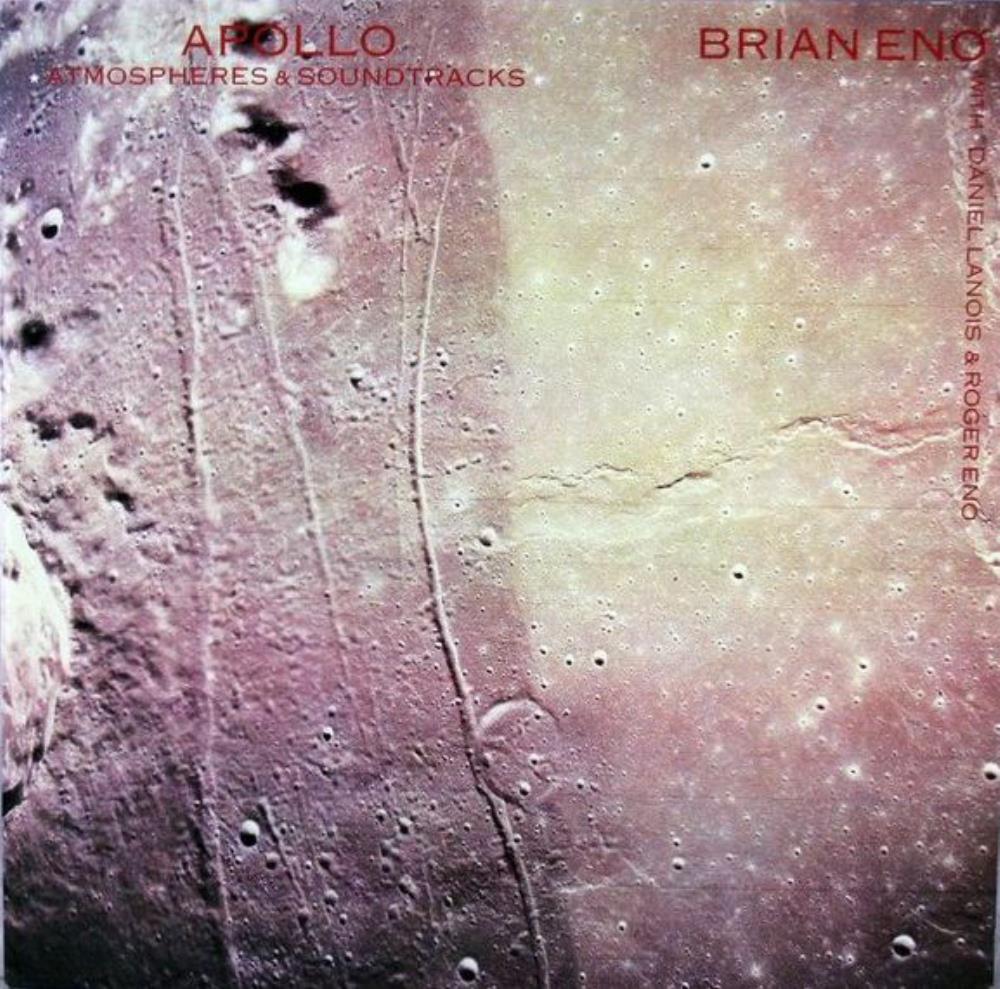
I’ve always been a fan of ambient music, but I haven’t dug too deeply into the genre until lately. Part of my recent ambient listening is due to a freelance article I did about the ambient country genre. While researching for that piece, I came across a Brian Eno record regarded as one of his best.
Brian Eno’s Apollo: Atmospheres and Soundtracks is a seminal ambient album released in 1983. It was created as a soundtrack for the documentary film For All Mankind, directed by Al Reinert, chronicling the Apollo missions to the Moon. While the record was released in 1983, the film wasn’t released until 1989.
By the time Eno made Apollo in 1983, he had already built a reputation as a sought-after producer for artists like David Bowie and David Byrne of The Talking Heads. That’s not to mention his extensive solo recordings throughout the 1970s, including Another Green World and Discreet Music.
Eno collaborated on the project with his brother, Roger Eno, and the guitarist, Daniel Lanois. Apollo features ethereal, atmospheric compositions that evoke the vastness of space and the awe-inspiring nature of the Apollo missions. Eno’s use of synthesizers, electronic effects, and ambient textures creates a sense of weightlessness and mystery, perfectly complementing the film’s imagery.
One of the most famous tracks from the album is “An Ending (Ascent),” which has been widely used in films, television shows, and commercials due to its evocative and emotional quality. Other notable tracks include “Under Stars” and “Drift.”
While all the music on the record can be described as ambient, there are actually a variety of styles used. Tracks like “Under Stars” are darker and have more complicated textures similar to Eno’s album Ambient 4/On Land. Other songs are smoother electronic tracks, such as “Drift.” And then there are the country-inspired ambient tracks featuring Lanois on pedal steel guitar, such as “Weightless.”
Interestingly, Eno describes being underwhelmed by the television footage of the Apollo 11 moon landing (he was 21 at the time). He later wrote that the TV anchors and journalists who offered their analysis, “[obscured] the grandeur and strangeness of the event with a patina of down-to-earth chatter.” In that sense, the Apollo record can be seen as an attempt by Eno to recapture the strangeness of the Apollo moon missions that he thought was lacking. The idea of humanity entering the new frontier – and taking away the American patriotic crap out of it.
Another interesting side note is what Eno mentioned in a 1998 interview. When he was asked to do music for the film, he learned that the astronauts were each allowed to bring a cassette with them on the missions, and nearly all of them took country and western songs. “I thought it was a fabulous idea that people were out in space, playing this music which really belongs to another frontier—in a way, seeing themselves as cowboys,” Eno said in the interview.
Apollo is often regarded as one of Brian Eno’s finest works and a landmark album in the ambient genre. Its influence can be heard in the work of countless musicians and composers whose otherworldly soundscapes have inspired. You could say that about many Eno albums – he is the Father of Ambient Music, after all.
But Apollo seems to have an influence that may go beyond some of his other records. For example, the pedal steel guitar playing of Lanois on a few tracks make this an early and hugely influential record on the emerging “ambient country” genre, a genre that has seen some popularity in recent years thanks to artists like NYC-based SUSS and Seawind of Battery.
Philly-based guitarist Nick Millevoi may also be one of those musicians inspired by Apollo. Millevoi cited Eno and Lanois as inspirations for his recent guitar-based instrumental record, Moon Pulses, released via Island House Recordings. I’m unsure if Apollo specifically influenced Millevoi, but I feel it may have. Either way, if you’re new to Brian Eno’s vast discography, Apollo is a great place to start. Enjoy!
Read more about Apollo by Brian Eno here.
Consider supporting The Third Eye on Patreon here.



Leave a Reply