
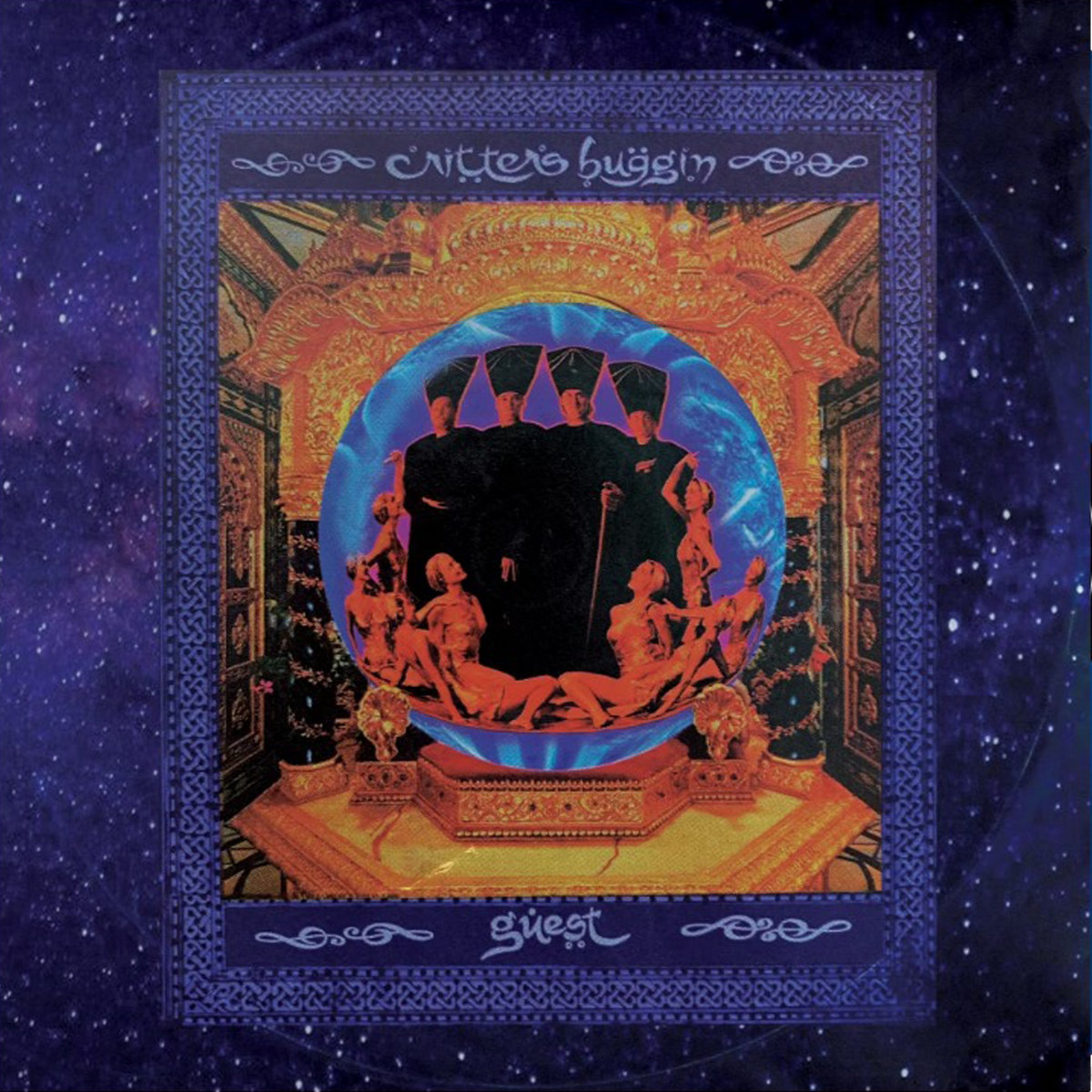
Guest, the 1994 debut from Seattle instrumental group Critters Buggin, documents a band working through improvisation as both method and structure. Recorded in informal sessions and assembled through early digital editing, the album draws on jazz, funk, and experimental rock without settling into any one framework, prioritizing groove, texture, and group interplay.
Emerging from the same loose orbit that surrounded the city’s grunge explosion, Critters Buggin took a different route entirely. Much, much different.
Instead of distortion and angst, they leaned into rhythm, texture, and the kind of exploratory interplay that draws as much from jazz as from funk, dub, and experimental rock. The core lineup—Matt Chamberlain on drums, Skerik on sax, Brad Houser on bass, and John Bush on percussion—locks into grooves that feel alive, constantly shifting but never losing their center of gravity.
The origin of Guest is as DIY as it gets. Recorded in Stone Gossard’s recently soundproofed, barely outfitted basement, the sessions were built on long, open-ended improvisations. Hours of tape rolled while the band chased ideas down whatever path they led. Later, those sessions were reshaped using early digital editing tools that were, at the time, painfully slow and wildly limiting.
Skerik describes the process like a collision of eras and sensibilities: part analog jam session, part digital surgery. Crossfades took ages to render, edits were crude but deliberate, and in between, there was plenty of waiting—filled, apparently, with experimentation of all kinds. At one point, a stray guitar in the room became a percussive object, tapped and folded into the mix. Nothing was off-limits. Everything was material.
That openness is what gives Guest its edge. The grooves are deep, but they’re never predictable. Tracks unfold like conversations—sometimes locked in, sometimes veering off into strange, abstract corners before snapping back into something physical and immediate. There’s a sense that the band is discovering the music in real time, even in its final, edited form.
Released on Gossard’s Loosegroove label, Guest never quite fit into the dominant narratives of its time, which is probably why it’s endured. It exists outside of easy categorization—a document of a band more interested in process than product, more focused on exploration than arrival.


Leave a Reply