
Microwaves have always operated in that unstable zone where structure starts to break down. You can place them somewhere between noise rock abrasion, No Wave, and the weight of avant-garde metal. It’s not a comfortable place, but that’s kind of the point. Across releases for labels like Three One G, Crucial Blast, and ugExplode, the band has steadily refined a sound that feels like controlled collapse.
On Temporal Shifter, that tension tightens into something sharper and heavier. There’s a sense that everything is locking into place—not in a clean or polished way, but like machinery grinding itself into alignment under pressure.
When you’re listening, your head is locked in that machinery like a vise grip tightening its screws. But, I dunno, it feels kind of cool. Or maybe it’s more like sticking your head inside an actual microwave, frying your brains out.
New member Zach Moore’s bass work anchors the record in a dense, distorted low-end, while David Kuzy’s guitar cuts through with jagged, dissonant lines that refuse to settle. John Roman’s drumming is slightly destabilizing, shifting patterns just enough to keep everything on edge. Together, they move like a single organism, mechanical yet volatile, conjuring a paranoid, near-future atmosphere in which nothing fully resolves.
I noticed the band tags themselves as “math rock,” which is kind of funny, but it tracks. The rhythms lurch and pivot through odd time signatures, full of starts, stops, and sharp turns that only reveal their logic after the fact, like chaos theory unfolding in real time. Still, this isn’t the clean, diagrammed version of math rock—no tidy equations, no chalkboard proofs. If anything, it’s math after the system breaks down: unstable, volatile, and just barely holding together. There will also be no pop quiz at the end of this review.
There are echoes here of Six Finger Satellite’s twitchy propulsion, The Locust’s chaotic precision, but Temporal Shifter never leans too heavily on its lineage. It feels more like an extension of that tradition into something colder, more fragmented, more uncertain.
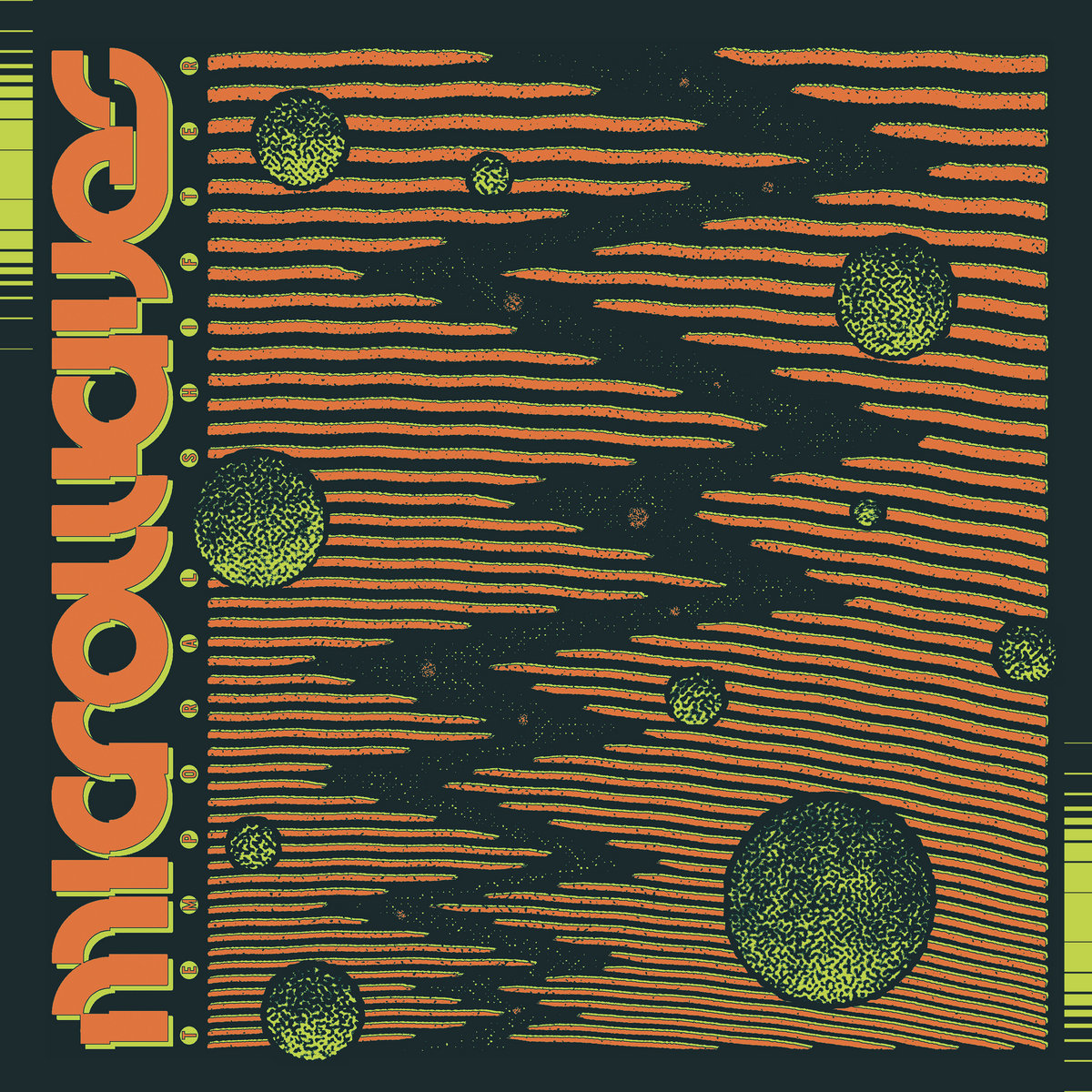
Out now via Decoherence, the album is available in two vinyl variants—vibrant orange and a limited 180g black pressing (only 50 copies)—as well as digital. The artwork, courtesy of Neil Burke (Men’s Recovery Project), matches the music’s uneasy energy: fractured, intense, and impossible to fully pin down.


Leave a Reply