
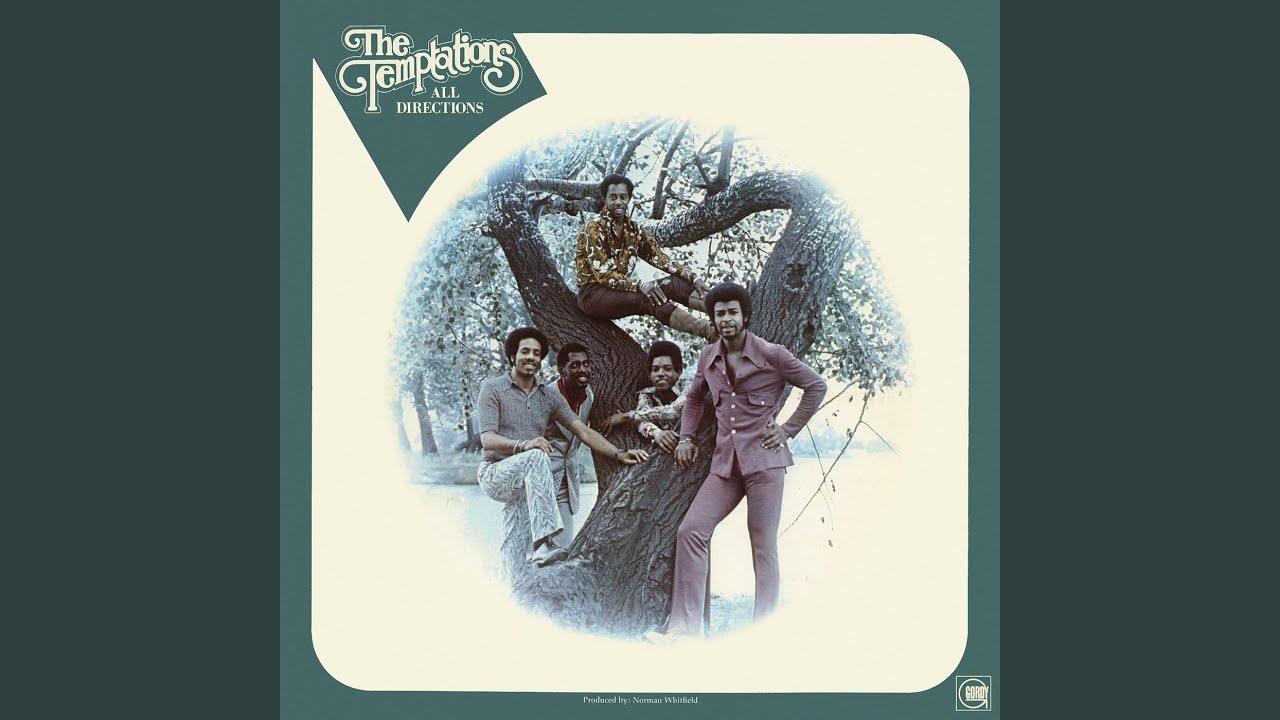
“Papa Was a Rollin’ Stone” is the cornerstone of All Directions, The Temptations’ 16th album. Occupying over a third of the album’s entire runtime at almost 12 minutes, it’s a track that has defined the later Temptations’ sound, a mix of heavy funk and psychedelic soul. It’s also one that The Temptations did not want to record, along with another socio-political tune appearing on the album.
Part of the reason for the band’s resistance came from another reason. The band was tired of utilizing their producer Norman Whitfield’s “psychedelic soul” sound and wanted to go back to their old ballad formula with hits like “My Girl” that originally brought them success. To add to their argument, The Temptations’ previous album, Solid Rock, achieved middling reception due to Whitfield’s strange, psychedelic choices that alienated portions of the Temptations’ audience.
Because Otis Williams and Melvin Franklin fought with Whitfield for his continued insistence on this genre, these band complications eventually led to the loss of band member Eddie Kendricks, who dropped out to follow a solo career. When adding in Paul Hendricks’ departure due to health issues, The Temptations believed All Directions would be a flop.
However, All Directions became one of the most successful albums for the band. It rose to number two on the Billboard charts and did significantly well worldwide. It represents the culmination of the band’s psychedelic soul output that was built upon with seminal albums such as Cloud Nine, Psychedelic Shack, and Puzzle People.
All Directions presents the final evolution by combining psychedelic trippy motifs with political messaging, while mixing it with orchestral, funk, and pop conventions to rocket it to a new stratosphere of sound.
One of All Directions’ most stunning aspects is how chock-full of variety the album is, considering the runtime is relatively short at 33 minutes. The album begins with “Funky Music Sho Nuff Turns Me On,” a recording that’s meant to sound “live.” Production-wise, it would hit a little under the mark if it didn’t carry such a funky groove.
The song, a cover originally released a year earlier by Edwin Starr, showcases what The Temptations excel at in this era. Trading vocals and harmonies combine with funky wah-wah guitar licks and groovy basslines to create a head nodder that becomes a foot stomper by the end of the tune.
From here, the listener may have whiplash when moving into the next track, because of the edgy political choices made on “Run Charlie Run.” Lyrics aren’t afraid to call out white flight and hypocrisy: “I watch you go to church on Sunday/ But you forget all you learned on Monday/ Well, you see your smiling face can’t hide/ Well well well, how you hate your brother inside.”
When combined with the even more bold drop of the n-word in the chorus (“Run, Charlie, run/ Look! The n*****s are coming!/ The n*****s is coming?!”), it’s clear that the Gordy label was unafraid to take race concerns head-on.
As a pivotal element of psychedelic soul, this makes sense. Beyond the lyric tradeoffs by different singers combined with funkier aspects that are staples of the psychedelic soul genre, another major aspect is speaking up for socio-political issues. Despite the label not being afraid to strut these values, The Temptations were more concerned with the brazen political stance, with Otis Williams even saying, “You got to be kidding me” when he was first handed the tune. In the end, though, the group still stepped up and recorded it.
Next is the album’s shining star, “Papa Was a Rollin’ Stone.” It was a number one hit on the US Pop Singles chart, a number five hit on the US R&B Singles chart, and a 1973 Grammy Award Winner within its run. Again, surprisingly, the song was a cover, first released by the Undisputed Truth, but didn’t achieve much success during its first run-through.
When hearing this almost twelve-minute song, it’s hard to understand why The Temptations would have ever been upset by it, but there are multiple reasons why they warred with Norman Whitfield about it.
Part of the reason for The Temptations’ success with it over the original comes from Norman Whitfield’s ambition, as the track builds for over four minutes before The Temptations even start singing. A thumping, addictively groove-laden bassline intersects with orchestral strings, wah-wah guitar, and a trippy, echoing trumpet played by Maurice Davis.
The listener is enveloped in a wall of sound, as fuzzy keyboards enter and trade with the strings. Still, the bassline remains consistent, ever pulsating like a heartbeat throughout as different instruments fade in and out of the piece. By the time Dennis Edwards starts singing, the listener is fully immersed.
As the Temptations trade lyrics throughout the song, it’s reminiscent of the psychedelic soul that made Cloud Nine and Puzzle People so compelling. The higher ranges of Damon Harris and Richard Street mix beautifully with Edwards’ baritone and the gravelly, so low it’s mindblowing, pipes of Melvin Franklin. As if the earlier instrumental break wasn’t enough, Whitfield doubles down in the latter half of the song when instrumentation layers build even more intricately as violins, harp, auxiliary percussion, and even hand-clapping continue the groove.
When hearing this almost twelve-minute song, it’s hard to understand why The Temptations would have ever been upset by it, but there are multiple reasons why they warred with Norman Whitfield about it.
The first was all the instrumentation in “Papa Was a Rolling Stone,” as the group felt sidelined on the track, despite the immense and overwhelming soundscape that Norman Whitfield was creating. Then, there were the lyrics that hit close to home for Dennis Edwards. When he sings “third of September” being the day that the speaker of the song will “always remember” because his “daddy died,” it felt more than coincidental as Edwards’ father passed away around the same time, a month later in October.
Even with Whitfield’s continued claims that any relation to Edwards’ father was coincidental, the connection was concerning enough for Edwards to, at first, refuse to sing it. To add to these issues, there was the theming of the song, which again Edwards had issues with.
As his father was a minister and not a “rolling stone,” he took an affront at the possible, perceived connection. Despite these gripes, thankfully, the group and Whitfield surmounted these hurdles and created one of the greatest songs of all time.
On the second side of the record, it seems that Whitfield fulfilled The Temptations’ desire, at least partially, to record more ballads reminiscent of their past catalog. For example, the listener revisits The Temptations’ older sound with “Love Woke Me Up This Morning.”
Written by Nickolas Ashford and Valerie Simpson (of the famous Ashford & Simpson), it’s a short tune with sweet strings, simple guitar strums, and a to-the-point message about love.
Though the album version of “Papa Was a Rollin’ Stone” alone is worth the price of admission, the mix of darker ballads and other funk grooves in between elevates All Directions to a true classic.
It’s contrasted by the following darker “I Ain’t Got Nothin’,” utilizing beautiful, layered vocals against a piano groove and “shoo-wop-shoo-wops.” The tune extolls bluesy sentiments about “everybody’s got something but me,” and vocal tradeoffs add a developed richness to the overall tune.
Following this is “The First Time Ever (I Saw Your Face),” another ballad led by Richard Street. Though the strings and piano are gorgeous, Street’s vocals are almost a little too breathy, and when combined with love cliches, the overall song becomes a bit forgettable.
Thankfully, it’s contrasted well with “Mother Nature,” a velvet smooth groover with loud bellowing tom beats, syncopated basslines, and rollicking piano. Soulfully cascading over the strings that roll over the piece, Edwards cries to Mother Nature to deliver him from the struggles of his 9 to 5 as he wishes to become one with nature again.
The album closes out with another funk banger written by psychedelic soul legend Isaac Hayes, “Do Your Thing.” Syncopated basslines line up with piano trills and blaring trumpet, as several members of The Temptations layer in and build harmonies over it. It’s a song that’s easy to live in, and though it only lasts about three minutes, as it fades out, it teases the listener to flip the record over and play it again.
Though the first side surely hits harder than the second on All Directions, the album’s front half exemplifies The Temptations’ later psychedelic soul. When Whitfield’s production is added to varied funky conventions and ornate walls of sound, the music becomes iconic.
Though the album version of “Papa Was a Rollin’ Stone” alone is worth the price of admission, the mix of darker ballads and other funk grooves in between elevates All Directions to a true classic.
The Temptations may have thought their psychedelic soul days were going to be over after the release of All Directions, but their unlikely success made a follow-up psychedelic soul album viable.
A year later, Masterpiece was released with its title track becoming another over-the-top, almost fourteen-minute song. Despite The Temptations’ reservations against Whitfield’s sound, the choices on All Directions paid off, creating one of the best soul albums of all time.
This article was written by Bill Cooper, who writes about music, films, books, and pop culture in various internet corners like Spectrum Culture. His two greatest urges, discovering new music and writing, keep him up at night and going during the day. The extensive amount of coffee he drinks may also contribute.
You can follow Bill Cooper on Bluesky and his Substack, Bill’s Takes.



Leave a Reply