
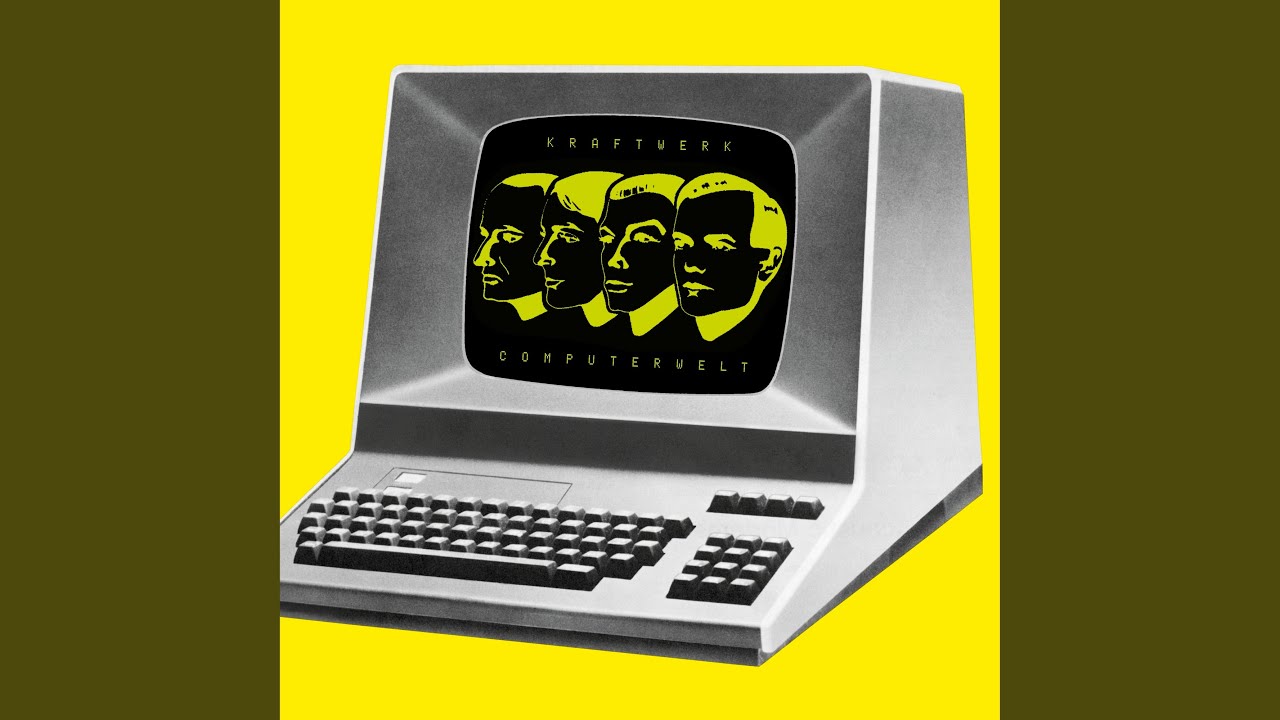
Released on this day in 1981, Kraftwerk’s Computer World (Computerwelt) marked a shift in the band’s process and focus.
After a three-year break spent rebuilding their studio around digital tools, the group returned with an album that reflected the growing presence of computers, not just in music but across everyday life. It’s a record built on analog equipment yet deeply preoccupied with digital systems.
Ralf Hütter explained that the new studio setup allowed the band to generate any sound themselves, removing the need for outside players. This autonomy shaped the album’s precise, synthetic, and minimal sound.
But Computer World isn’t simply a celebration of technological progress. It also raises questions about control, data, and surveillance. The title track casually lists institutions like Interpol, the FBI, and Deutsche Bank, suggesting a networked world in which individuals are increasingly monitored.
Elsewhere, Kraftwerk approaches the subject of technology with curiosity and play. “Computer Love” sketches out a form of digital longing that anticipates online dating. “Pocket Calculator” finds novelty in the everyday, turning a basic Casio into a musical tool. Hütter described their approach as taking machines typically associated with bureaucracy and finding creative uses for them, disrupting their original purpose.
Though the album was released in both German and English, its themes crossed borders. It peaked at #15 in the UK and earned a place at #2 on NME’s best albums of 1981. The single “Computer Love,” later paired with “The Model,” reached #1 on the UK charts.
Despite mixed contemporary reviews—Smash Hits called it “gimmicky”—its reputation has grown. Publications like Pitchfork, Rolling Stone, and Slant now rank it among the most influential albums of the 1980s.
Its influence is broad. Afrika Bambaataa’s “Planet Rock,” Cybotron’s Clear, Coldplay’s “Talk,” and even parts of Fergie’s “Fergalicious” borrow from Computer World directly or in spirit. Kraftwerk’s tightly structured sound and thematic focus helped set the terms for how electronic music would engage with modern life, not with nostalgia, but with a kind of observational clarity.




Leave a Reply