
The Avant-Garde was a social movement in the 1950s. It challenged the cultural values of contemporary society, communicated social issues, pushed boundaries with innovation, embraced the democracy’s willingness to embrace dissent, and gave a clearer impression of reality.
The term Avant-Garde could be defined as the front part of a marching army, the scouts that first head into unknown territory. In a battle between conformity and creativity in an art-producing machine, the Avant-Garde movement stood as the dissonance of the machine.
Andy Warhol’s factory epitomizes the dichotomy between capital and culture in art. Warhol designated his space, a space purely creative, to be associated with industrial manufacture. His first experimental project took place between 1964 and 1968.
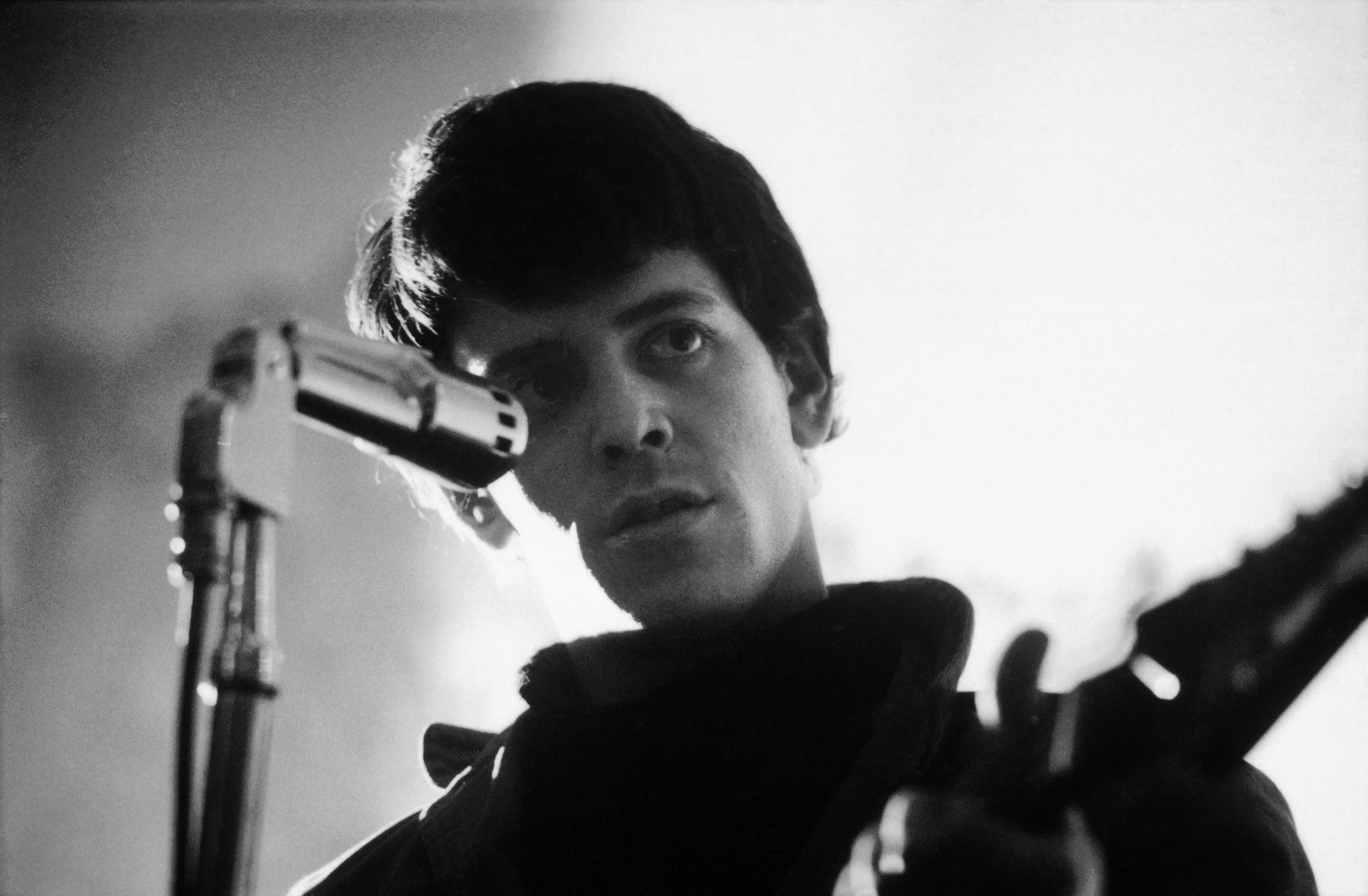
Punk rock, heavily inspired by the Avant-Garde, was led in a big way by the Velvet Underground. Tie setting to dissent, and you have Andy Warhol and the band The Velvet Underground.
Collaborations with Andy Warhol led to a legacy that merges rock, poetry, and art. Andy Warhol chose to focus on the commercialization of art, while Lou Reed focused on the grittiness of urban life. Shortly after forming, the band was fortuitously taken under the wing of newly famous and controversial artist Warhol, who offered to manage the band.
The Harvard Avant-Garde artist Delmore Schwartz was one of Reed’s first mentors. Songs like “European Son” pay tribute to the artist. Shwartz was ravaged by alcohol and pills, mentally ill, and severely paranoid, with his career in shambles, when he first met Lou Reed, but considerably changed the young musician’s life.

Another influence on Lou Reed was the Spanish writer Federico Garcia Lorca. His collection of poems, ‘Poet in New York,’ inspired one of his most beloved solo albums, ‘New York.’
A psychedelic experience is one in which everything flows together. Pushing boundaries in contrast to the mainstream consciousness is defined by psychedelics as well. Both can be said to be true regarding the Avant-Garde as well.
When Syracuse University gave Reed its most prestigious alumni award in 2007, he said in his acceptance speech, “Who would’ve believed this one? I hope Delmore, if you’re listening, you are finally proud as well. My name is forever linked to yours in the part of heaven reserved for Brooklyn Poets.”
Tying the spiritual to the setting is also psychedelic. In this case, Reed leads his listeners on to his aspirations of reaching divinity in reaching the part of heaven reserved for Brooklyn Poets. This tying together as if all is one and one is all leads his listeners to the poet, Avant-Garde, and musician’s spirituality, a divine concept tied to the grittiness of urban life.
Reed’s poetry was highly regarded as well. “The sin was craziness, you see, don’t blame yourself for that- a strange childhood, well, that is true, but nothing can be done about that.”
An example of his written and spoken words collected to form a complete image of what is not the norm, a contrast to what is understood. Another example is, “You sing my songs to prove you are not a waste.” Again, you have an example that sets itself apart for this heavenly poet, one that stands apart from the conformity of even praise.
The scene was a war on the ideals of the America we praise. A war that caused a shift in the mindsets from the glamorous of art the mainstream praises and contrasts them with the grittiness of urban. Violence can be lifted to the status of an art, which, unlike ballet, does not require the total man. A man removed from his experience is not undone by his surroundings. Maybe it’s too grim to go into wholeheartedly, and it makes more sense to critique the situation.
Reed’s songs also focus on the New York School’s dedication to the every day and the ordinary rather than the romantic, exotic, or fantastic. This could be seen in the depiction of the everyman of the grittiness of the urban New York life. Velvet Underground was also seen as a gay band and was critiqued in homophobic terms.
To reiterate, Lou Reed highly praised the Harvard Avant-Garde Delmore Schwartz. He described one of his encounters with him by stating, “Before he died, he was on a drunken with me, had his arm around, and he said, ‘You know I’m going to die one of these days’… he was one of the unhappiest people I know, he said, “You can write, and if you sell out and there’s a heaven from which you can be haunted, I’ll haunt you. And maybe people will get tired of Lou Reed songs, but I’ll always write poems.” In saying this, Lou Reed held him in high regard and stated the influence of the Avant-Garde.
As one of Reed’s obituaries put it, he ‘seemed to embody downtown Manhattan culture of the 1960s and 70s and was as essential a New York artist as Martin Scorcese or Woody Allen.’
Frank O’Hara and Lou Reed have been dubbed the poet laureates of New York City.
Sterling Morrison is one of the founding members of Velvet Underground and an American guitarist. “We were quite intelligent. I’m sure we’re the most highly scholarshiped band in history.”

Reed often expressed his conviction that rock could extend the kinds of literature and art he loved into another realm. This was very Avant-Garde for him in every way, shape, and form.
Reed brought jazz into the picture, introducing an alternative lifestyle, the counterculture, into the consciousness of America. Drug use, the LGBT lifestyle, and the voice of the minority were all explored in the stream of consciousness that was Lou Reed and his contemporaries. Reed championed rock and roll and, in so doing, brought the celebration of life into the consciousness of America.
He’s like Bob Dylan with more of a twist of psychedelia. It was inspired by jazz, folk, rock n roll, and blues, all about the roots. He waged a war inspired by Andy Warhol on the mainstream consciousness of America with songs like ‘Oh Sweet Nothin’ with messages within the music like, leave it all behind and hold onto the vast open nothingness that holds freedom in its raw form.
This article was written by Bryan Montijo, who primarily focuses on music, spirituality, and psychedelics. Bryan has written a few novels, which can be found at wattpad@CraftedTales. He also has his own blog, where he discusses everything he loves, from music to nature and writing. You can find it here at medium@bmontijo555.


Leave a Reply